
Brunei’s education minister outlined ambitious plans to transform the nation’s higher education landscape during key regional meetings, signaling a strategic push to align with broader ASEAN goals for inclusive, future-ready learning systems. The discussions underscore growing regional cooperation to address critical educational gaps affecting millions of out-of-school children and youth across Southeast Asia.
**Key Points**
- Brunei strengthened its Compulsory Education Act by lowering mandatory school entry age to five years
- ASEAN ministers emphasized need for higher education institutions to become more inclusive and responsive to technological changes
- Regional cooperation focuses on tackling foundational learning deficits and youth unemployment
- Support programs for vulnerable groups include school essentials assistance and feeding programmes
How is Brunei aligning with ASEAN’s vision for inclusive, future-ready education?
Minister of Education Datin Seri Setia Dr Romaizah Md Salleh emphasized Brunei Darussalam’s commitment to elevate higher education institutions to achieve global recognition for academic reputation, employer recognition, faculty quality and impactful research. Consequently, this strategic focus aims to produce workforce-ready graduates equipped with evolving skills demanded by modern industries.
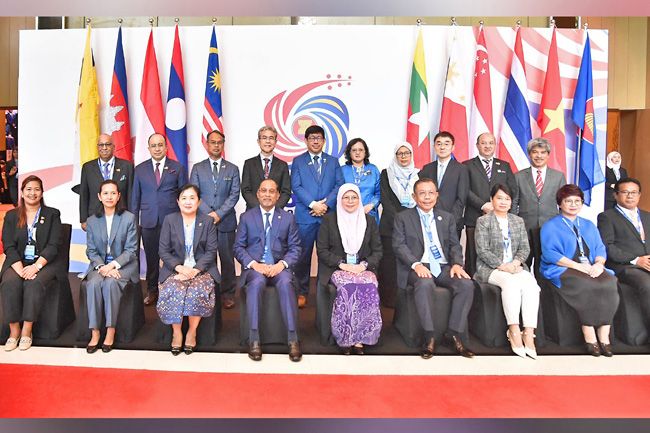
These commitments emerged during her participation in two significant regional gatherings: the ASEAN Ministers of Education Roundtable on Accelerating Innovative Strategies and the ASEAN Higher Education Ministers’ Roundtable, both held from June 17 to 20 in Langkawi, Malaysia.
What innovative strategies are addressing out-of-school children challenges?
Malaysia leads regional efforts on educational equity
Malaysia’s Minister of Education Fadhlina Sidek officiated the roundtable focused on mitigating out-of-school children and youth (OOSCY) challenges. She emphasized the urgent need to tackle deficits in foundational learning, skill gaps, and youth unemployment, noting how these interconnected issues exacerbate the broader challenge.
Moreover, she underscored Malaysia’s commitment to providing equitable access to quality education and meaningful participation opportunities for all young people, particularly those currently excluded from formal schooling systems.
Brunei’s compulsory education reforms show concrete progress
Dr Romaizah presented an overview of Brunei Darussalam’s strengthened Compulsory Education Act, highlighting the reduction of mandatory school entry age to five years. This crucial change provides earlier access to schooling for children across the sultanate.
To support this initiative, Brunei has introduced comprehensive programs targeting vulnerable groups:
- Bantuan Keperluan Persekolahan Tahunan program providing essential school supplies
- School feeding programmes ensuring nutritional support
- Targeted assistance designed as part of broader educational challenge mitigation efforts
How are higher education institutions adapting for the next decade?
During the Higher Education Ministers’ Roundtable themed ‘Envisioning the Next Decade and Beyond’, Dr Zambry Abdul Kadir highlighted the necessity for institutions to become more inclusive, agile and responsive to real-world demands. In contrast to traditional approaches, this vision emphasizes adaptation to rapid technological and industrial changes reshaping global economies.
*The transformation requires unprecedented collaboration across sectors.*
Dr Zambry underlined that enhanced collaboration among governments, academia, and industry represents the key to preparing youth for future employment opportunities. Notably, this approach aims to create pathways fostering an innovative and cohesive ASEAN that leaves no one behind, reflecting broader regional educational cooperation initiatives.
Institutional representation demonstrates commitment
Permanent Secretary (Core Education) Dr Shamsiah Zuraini Kanchanawati Tajuddin and other Ministry of Education officials attended the meetings, demonstrating Brunei’s institutional commitment to regional educational coordination.
Furthermore, Dr Shamsiah had previously participated in the ASEAN Education Forum on June 8, engaging in discussions about research findings and best practices to enhance educational accessibility for marginalized and disadvantaged children and youth across the region.
| Event | Focus Area | Key Outcome |
|---|---|---|
| OOSCY Roundtable | Out-of-school children | Innovative mitigation strategies |
| Higher Education Roundtable | Future-ready institutions | Enhanced regional collaboration |
| Education Forum | Marginalized groups | Best practices sharing |
Bottom Line
Brunei’s participation in these high-level ASEAN educational forums signals a strategic commitment to comprehensive education reform that addresses both foundational learning gaps and future workforce preparation. The country’s concrete policy changes, including lowering compulsory education age and implementing targeted support programs, demonstrate practical steps toward achieving regional educational goals.
Moving forward, the success of these initiatives will depend on sustained collaboration between governments, educational institutions, and industry partners across ASEAN member states. The emphasis on inclusive, technology-responsive education systems positions the region to better navigate future economic and social challenges while ensuring no learner is left behind.