
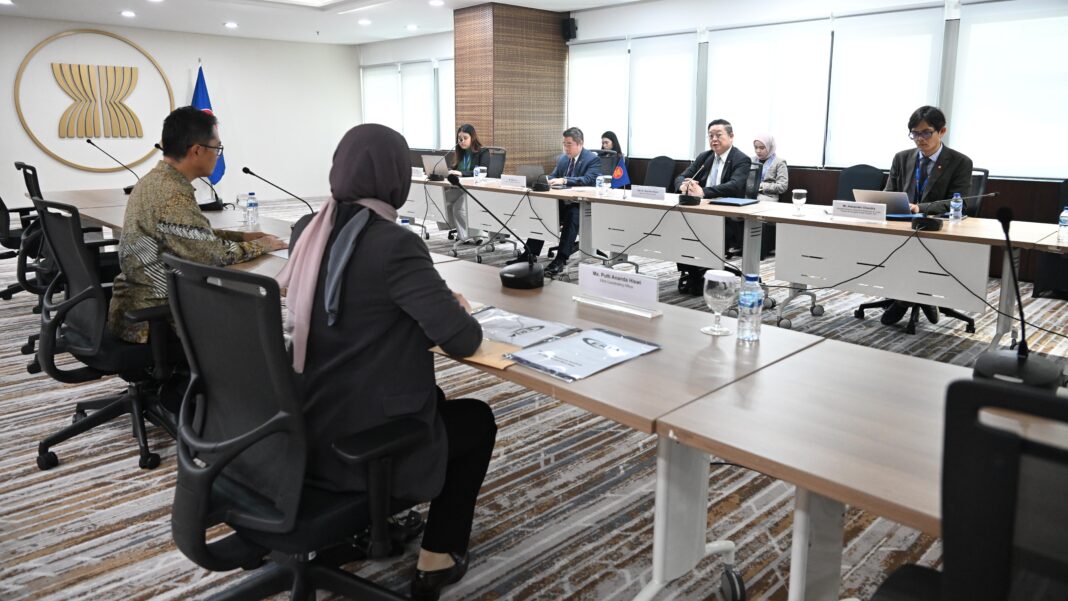
The Economic Research Institute for ASEAN and East Asia (ERIA) stands as one of the most influential think tanks shaping regional economic policy across Southeast Asia and beyond. Established in 2008, this Jakarta-based organization has quietly become a powerhouse in economic research, policy recommendations, and regional integration initiatives that affect millions of lives across the Asia-Pacific region.
ERIA: Driving Economic Integration Across ASEAN and East Asia
Since its inception over a decade ago, ERIA has emerged as a critical bridge between academic research and practical policy implementation. Moreover, the institute serves as a unique platform where government officials, business leaders, and researchers collaborate to address the region’s most pressing economic challenges.
The Genesis of Regional Economic Cooperation
ERIA was born from a recognition that Southeast Asia and East Asia needed a dedicated research institution focused on regional economic integration. Unlike traditional think tanks that operate within national boundaries, this organization takes a distinctly regional approach to economic analysis and policy formulation.
The institute’s establishment marked a significant milestone in ASEAN’s journey toward deeper economic integration, providing the analytical foundation for many of the bloc’s subsequent trade and investment initiatives.
Research Focus Areas That Shape Policy
ERIA’s research agenda encompasses several critical areas that directly impact regional development:
- Trade and investment facilitation across member countries
- Infrastructure connectivity and development strategies
- Energy security and sustainable development initiatives
- Small and medium enterprise development programs
- Digital economy transformation and innovation policies
Bridging the Infrastructure Gap
One of ERIA’s most significant contributions has been its comprehensive research on infrastructure connectivity. Furthermore, the institute’s studies have provided the analytical foundation for major regional projects, including cross-border transportation networks and digital infrastructure development.
Impact on Regional Economic Governance
The institute’s influence extends far beyond academic circles. On the contrary, ERIA’s research directly informs policy decisions at the highest levels of government across the region. The organization’s annual reports and policy briefs are regularly cited in official ASEAN documentation and summit declarations.
ERIA serves as the intellectual backbone for many of ASEAN’s most ambitious economic integration projects, providing evidence-based research that guides regional policy makers.
Collaborative Research Networks
The institute has built extensive partnerships with universities, government agencies, and international organizations throughout Asia. These collaborative networks enable ERIA to conduct large-scale research projects that would be impossible for any single institution to undertake independently.
Future Challenges and Opportunities
As regional economies continue to evolve, ERIA faces new challenges in addressing emerging issues such as digital transformation, climate change adaptation, and post-pandemic economic recovery. Nevertheless, the institute’s track record of producing actionable research positions it well to tackle these complex challenges.
The organization’s ongoing work on sustainable development and green economy initiatives demonstrates its commitment to addressing 21st-century economic challenges while maintaining its focus on regional integration and cooperation.
ERIA continues to serve as an indispensable resource for policy makers, researchers, and business leaders seeking to understand and navigate the complex economic landscape of Southeast Asia and East Asia. Through its rigorous research methodology and commitment to evidence-based policy recommendations, the institute remains at the forefront of regional economic development efforts, ensuring that academic insights translate into practical solutions for the region’s most pressing economic challenges.