
Have you ever wondered how artificial intelligence could reshape an entire nation’s future? In Malaysia, this isn’t just theoretical speculation—it’s becoming a strategic reality that’s capturing the attention of universities, policymakers, and business leaders alike.
AI in Nation Building Takes Center Stage at UKM Seminar
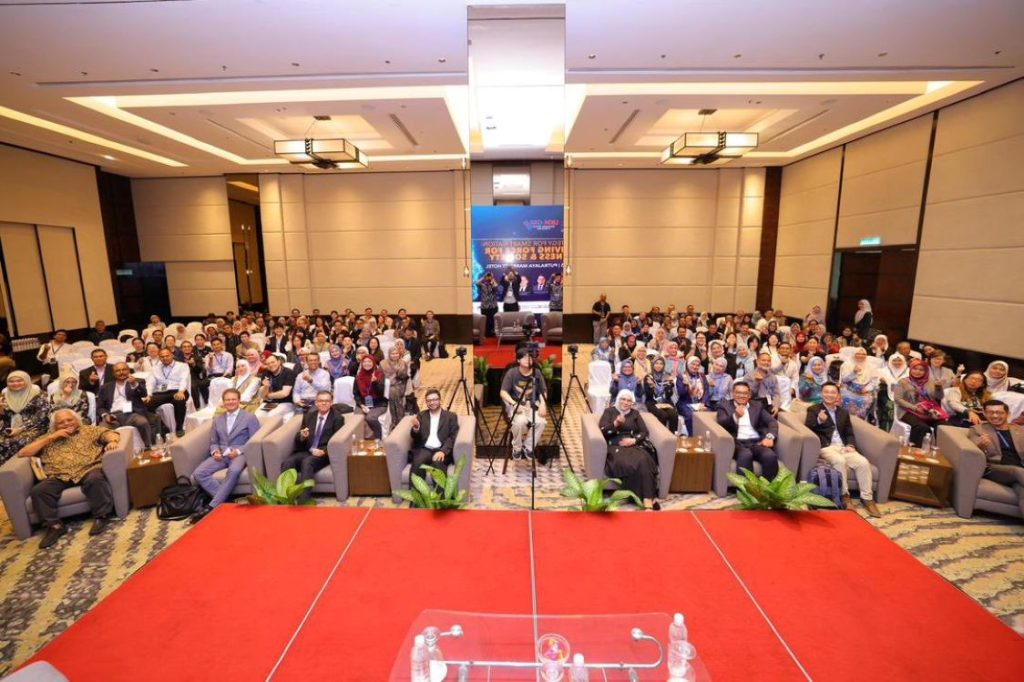
On 22 September 2025, Universiti Kebangsaan Malaysia (UKM) brought together an impressive coalition of thought leaders, innovators, policymakers, academics, and aspiring professionals in Putrajaya. The occasion? A groundbreaking seminar exploring how artificial intelligence in nation building can empower governments, industries, and communities across Malaysia.
Organized through the RHB-UKM Endowment and UKM-Graduate School of Business, the event carried a compelling theme: “Smart Strategy for Smart Nation – AI as a Driving Force for Business and Society.” Meanwhile, the seminar’s ambitious scope reflected Malaysia’s growing commitment to positioning AI at the heart of national development.
Beyond Efficiency: AI as Malaysia’s Strategic Catalyst
Acting Deputy Vice-Chancellor Prof. Ts. Dr. Faizal Mohamed, who officiated the seminar, delivered a particularly striking insight. According to Prof Faizal, AI has evolved far beyond futuristic speculation—it’s now a national priority deeply embedded within Malaysia’s MADANI framework.
“Malaysia’s path toward becoming a smart nation is guided by strategic frameworks such as the National Artificial Intelligence Roadmap, the MyDigital initiative, and the 12th Malaysia Plan,” he explained. These blueprints, as Prof. Faizal emphasized, recognize that AI represents much more than a simple efficiency tool.
Instead, AI serves as “a catalyst for economic resilience, public sector innovation and social progress.” This perspective transforms how we view technology’s role in national development—shifting from operational enhancement to fundamental transformation.
Navigating Complex Challenges Through Strategic Collaboration
However, Prof. Faizal also acknowledged the significant challenges accompanying AI’s rapid advancement. For example, issues surrounding data ethics, algorithmic bias, cybersecurity, privacy, and equitable access demand careful consideration. As a result, these concerns extend far beyond technical boundaries into deeply societal territory.
“These are not only technical issues but deeply societal ones, requiring strategic, inclusive, and ethical approaches,” Prof. Faizal noted. Consequently, successful AI implementation in nation building requires more than technological prowess—it demands comprehensive vision, robust governance, and meaningful collaboration.
Fostering Knowledge Exchange for Smart Nation Development
The seminar’s design reflected this collaborative approach perfectly. Participants engaged in extensive knowledge exchange, sharing best practices while exploring AI’s opportunities, challenges, and ethical implications. Furthermore, the event provided researchers, practitioners, and students with valuable platforms to present studies, showcase emerging technologies, and discuss effective AI adoption strategies.
This multi-stakeholder approach aligns with OECD recommendations for AI governance, which emphasize inclusive participation in shaping AI policy and implementation across society.
Building Tomorrow’s Smart Nation Today
Prof. Faizal’s concluding remarks captured the seminar’s essential message perfectly: “A smart nation is not built by technology alone—it is built by vision, governance, and collaboration. It is built by strategies that are holistic, forward-thinking, inclusive, and grounded in ethical responsibility.”
This perspective highlights how artificial intelligence has transitioned from research labs into everyday reality, fundamentally transforming how people live, work, learn, and lead. Nevertheless, realizing AI’s potential for nation building requires careful balance between innovation and responsibility.
Malaysia’s commitment to integrating AI into national development through events like UKM’s seminar demonstrates that building a smart nation isn’t just about adopting cutting-edge technology—it’s about fostering the collaborative relationships, ethical frameworks, and strategic thinking necessary to harness AI’s transformative power responsibly. As this movement gains momentum, the question isn’t whether AI will reshape Malaysia’s future, but how thoughtfully the nation will guide that transformation.