
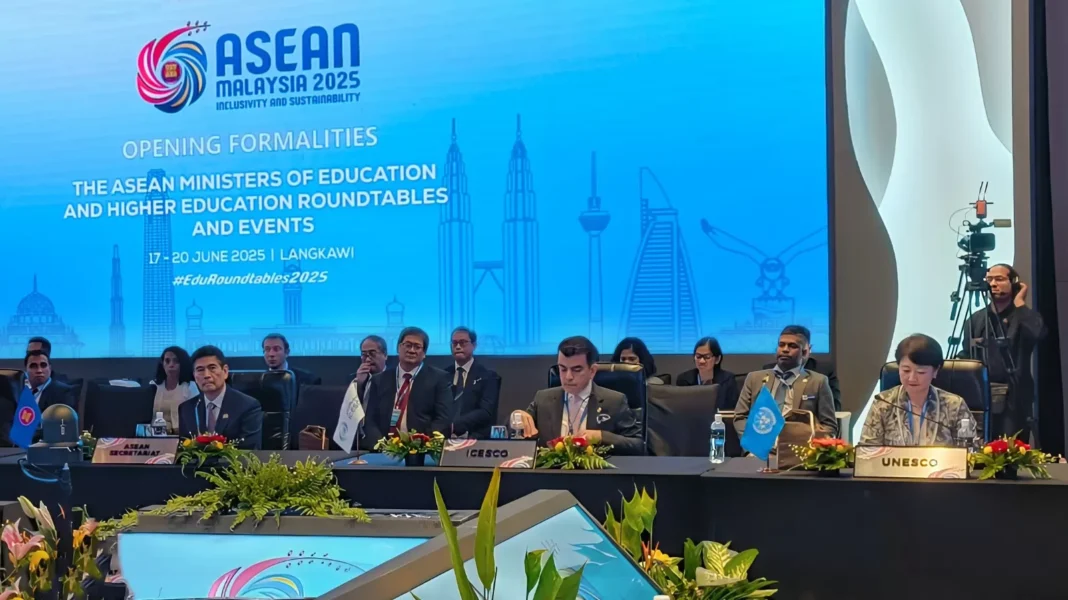
You sit in the plenary hall in Langkawi, Malaysia, watching as education ministers from across Southeast Asia lean forward in their seats. A stark statistic hangs in the air: 250 million children worldwide have no classroom to call home. The weight of this crisis is about to spark a call for unprecedented regional cooperation.
ICESCO Director-General Presents Five Strategic Recommendations to Address School Dropout at ASEAN Education Ministers’ Roundtable
Catalyst
Dr. Salim M. AlMalik, Director-General of the Islamic World Educational, Scientific and Cultural Organization (ICESCO), stepped to the podium as a keynote speaker during the opening session of the Roundtable of Ministers of Education and Higher Education of the Association of Southeast Asian Nations (ASEAN). His comprehensive address, entitled “From Dropout to Opportunity: Reclaiming the Future through Inclusive Education,” would soon challenge the assembled leaders to confront an escalating global emergency.
At the outset, Dr. AlMalik delivered a sobering warning that the increasing dropout of children and youth poses a growing threat to social stability and sustainable development. The numbers painted a devastating picture: over 250 million children and adolescents are currently out of school worldwide, with 98 million concentrated in sub-Saharan Africa—representing the highest regional figure globally.
Rising Action
As Dr. AlMalik elaborated on the scope of this educational crisis, he stressed that urgent collective action was no longer optional but essential. The consequences of school dropout extend far beyond individual students, rippling through families, communities, and entire nations. Meanwhile, these effects manifest through widening poverty gaps, reduced empowerment opportunities, and heightened risks of early marriage, child labor, and social marginalization.
However, the ICESCO Director-General didn’t merely present problems—he showcased proven solutions already making a difference. Dr. AlMalik highlighted ICESCO’s transformative initiatives across multiple regions, demonstrating how targeted interventions could reverse educational exclusion trends.
The organization’s track record spoke volumes about what was possible with coordinated effort.
These accomplishments included reintegrating over 19,000 girls into education in Yemen with support from the King Salman Humanitarian Aid and Relief Center (KSRelief); providing psychosocial, technical, and logistical support to internally displaced girls and boarders in Burkina Faso in cooperation with the Heydar Aliyev Foundation; improving sanitation and educational facilities in 240 schools across eight countries under the WASH programme, benefiting over 240,000 students; and deploying mobile education units for girls in remote areas of Nigeria.
Turning Point
Building on this foundation of experience, Dr. AlMalik presented five strategic recommendations to address school dropout, creating a comprehensive framework for regional action:
- Integrate the goal of keeping boys and girls in school, especially during adolescence, into national education strategies;
- Create alternative pathways to reintegrate those who left school due to early marriage, labor, displacement, or conflict;
- Foster safe and inclusive school environments and develop gender-sensitive curricula that include inspiring female role models;
- Empower local communities, especially women-led initiatives, to drive education solutions;
- Bridge the digital divide to ensure equal access to digital education and future learning opportunities for all children.
Subsequently, Dr. AlMalik called on education ministers to adopt a regional roadmap that could be updated at each ASEAN conference cycle. This proposal represented more than just policy coordination—it offered a systematic approach to educational equity across Southeast Asia.
Resolution
The ICESCO Director-General affirmed his organization’s readiness to serve as a key partner in designing and implementing this ambitious vision. Furthermore, he extended an open invitation to all participants to attend ICESCO’s upcoming Education Ministers’ Conference, scheduled for September 2026, and to visit the Organization’s headquarters in Rabat, where policies are crafted and partnerships are built to promote more inclusive, equitable, and empowering education.
The opening session also featured keynote addresses by H.E Dr. Fadhlina Sidek, Malaysia’s Minister of Education; H.E. San Lwin, Deputy Secretary-General of ASEAN for Socio-Cultural Community; and Ms. Maki Katsuno-Hayashikawa, UNESCO Representative to several Asian countries. Together, they emphasized innovative approaches to closing education gaps and ensuring that every child and youth has equal access to quality education as a vital investment in their potential and in building a better future.
As delegates prepare to return to their respective nations, the challenge ahead is clear: transforming these strategic recommendations into concrete action plans that can reach every child left behind by traditional educational systems. The roadmap has been drawn—now comes the critical work of implementation across borders, cultures, and communities united by a shared commitment to educational opportunity.