
Have you ever wondered how tomorrow’s engineers learn to navigate the ethical minefields they’ll face in their careers? At Curtin University Malaysia, future engineers are discovering that technical excellence alone isn’t enough—they need unwavering ethical foundations to lead responsibly in an increasingly complex professional landscape.
Curtin Malaysia Partners with MACC to Strengthen Ethical Awareness Among Future Engineers
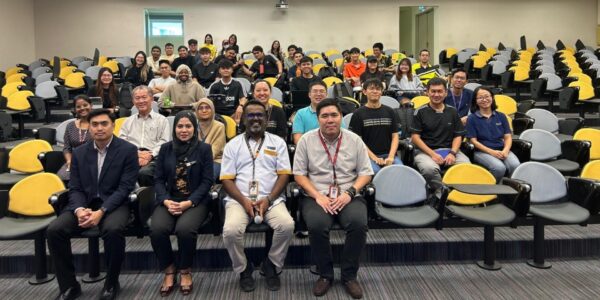
On 26 September 2025, Curtin University Malaysia (Curtin Malaysia) hosted a pivotal industry talk that brought real-world corruption risks into sharp focus for over 40 academic staff and students. Meanwhile, this wasn’t just another lecture—it was a collaboration with the Malaysian Anti-Corruption Commission (MACC) designed to arm future engineers with the ethical grounding they’ll desperately need in their professional lives.
Real Cases, Real Consequences: MACC’s Eye-Opening Presentation
Superintendent Nur Faidah Roslan from MACC delivered a presentation titled ‘Major Corruption Offences and Case Sharing’ that left participants with no illusions about the stakes involved. As a result, students from Environmental Engineering, Civil and Construction Engineering, and Construction Management programmes gained unprecedented insight into how corruption manifests in their chosen fields.
The presentation zeroed in on major corruption offences under the MACC Act 2009, particularly false claims and abuse of power. For example, Superintendent Nur Faidah used real case studies to demonstrate how seemingly minor ethical lapses can snowball into serious consequences for individuals, organisations, and society at large. She also emphasised the dangers lurking behind seemingly innocent gifts, reinforcing the critical importance of honesty, accountability, and due diligence in all professional dealings.
Innovation Meets Ethics: The UDL Framework Approach
This talk formed part of Curtin Malaysia’s ambitious Teaching Innovation Project, specifically ‘Implementing the Universal Design for Learning (UDL) Framework in the Engineering Ethics Component of the Civil and Environmental Engineering Programme.’ Led by Ir. Dr. Tan Yee Yong and Ir. Meheron Selowara Joo from the Department of Civil and Construction Engineering, this initiative represents a fresh approach to engineering ethics education.
Furthermore, Dr. Tan unveiled an innovative online module called ‘Code of Conduct & Ethics for Registered Engineers’ during the event. This cutting-edge resource leverages videos, case studies, and interactive content to deliver flexible, engaging learning experiences that address professional ethics in both local and global contexts.
Expert Voices: Why Ethical Training Matters More Than Ever
“This talk is crucial because it helps students understand that engineering ethics goes beyond technical skills. It is about integrity, honesty, and responsible decision-making in real-world situations.”
These words from Ir. Meheron capture the essence of why ethical awareness among future engineers has become so vital. As engineering projects grow more complex and their societal impact expands, the margin for ethical error continues to shrink.
Dr. Tan reinforced this perspective, adding: “Through the online module and industry talk, we provide diverse approaches aligned with Universal Design for Learning. Our goal is not only to guide students to do things right, but more importantly, to do the right thing.”
Building Tomorrow’s Ethical Engineers Today
By embedding ethical training directly into its engineering programmes and fostering partnerships with agencies like the MACC, Curtin Malaysia demonstrates its commitment to producing graduates who balance technical excellence with moral integrity. This approach ensures that future engineers enter the workforce equipped not just with problem-solving skills, but with the ethical compass needed to navigate complex professional challenges.
According to the OECD’s anti-corruption research, countries that invest in early ethical education see measurably lower corruption rates in professional sectors—making initiatives like this both timely and strategic.
The collaboration between academic institutions and anti-corruption agencies represents a powerful model for other universities seeking to strengthen their ethical education programmes. As corruption risks evolve alongside technological advancement, this proactive approach to ethics education becomes increasingly essential for producing responsible engineering professionals.
Curtin Malaysia’s partnership with MACC sends a clear message: the engineers of tomorrow must be guardians of both technical excellence and unwavering integrity. For students entering these critical professions, understanding that ethical leadership isn’t optional—it’s fundamental—could well determine the trajectory of their entire careers. The question now is whether other institutions will follow this lead in preparing ethically grounded professionals for an increasingly complex world.