
Singapore’s National University has just announced a groundbreaking S$20 million investment agreement that promises to transform the local startup ecosystem and cement the city-state’s position as a global innovation powerhouse. This substantial financial commitment represents more than just funding—it’s a strategic move to nurture homegrown entrepreneurial talent and accelerate deep technology innovations that could reshape entire industries.
NUS Seals S$20 Million Investment Deal to Strengthen Singapore’s Global Deep Technology Innovation Hub
The National University of Singapore (NUS) has formalized this major investment agreement specifically designed to support local startups throughout their entrepreneurial journey. Moreover, the initiative aims to reinforce Singapore’s role as a global hub for deep technology innovation and venture capital funding.
Deputy Prime Minister Champions Innovation at Renewed Hub Launch
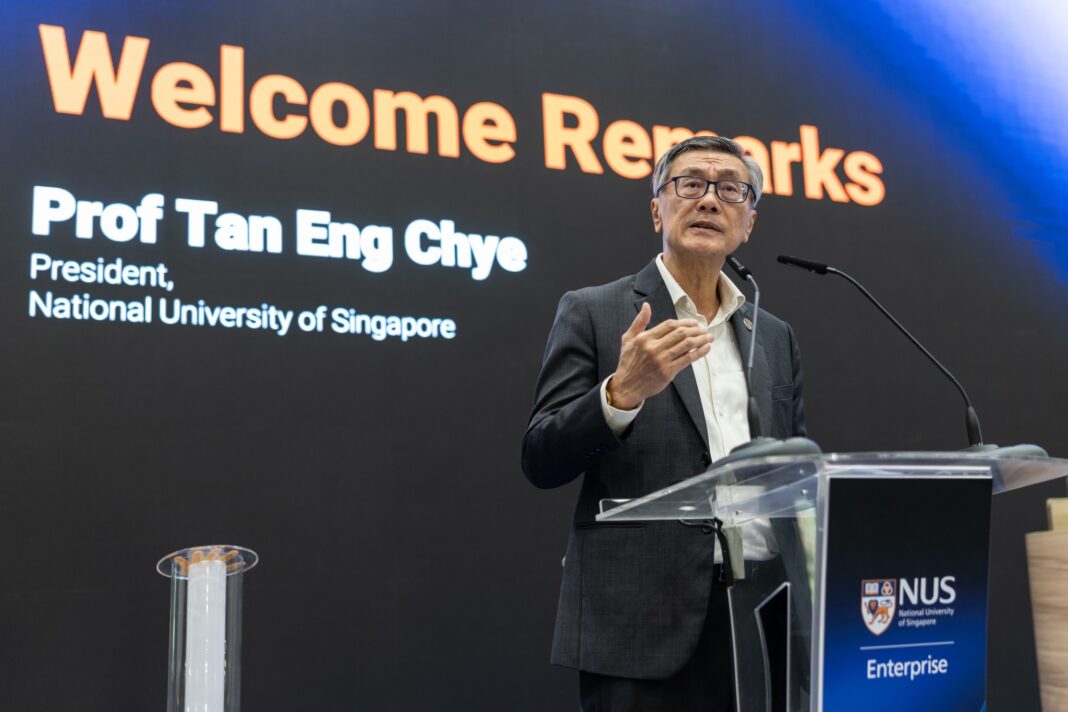
The announcement took center stage during the grand opening of NUS’s renovated innovation hub, where Deputy Prime Minister Gan Kim Yong emphasized how these measures will empower local entrepreneurs to flourish and bring their groundbreaking ideas to the global marketplace.
“We want startups to grow into enterprises, good companies that can produce products and services at scale and create good jobs and opportunities for Singapore and Singaporeans,” stated DPM Gan, who also serves as Minister for Trade and Industry.
Furthermore, DPM Gan highlighted that Singapore’s investment in Research, Innovation and Enterprise (RIE) activities reflects the nation’s commitment to completing the innovation cycle—ensuring that research and innovation directly contribute to economic growth and benefit society as a whole.
Building Tomorrow’s Innovation Leaders
DPM Gan emphasized that Singapore must cultivate more innovation experts and entrepreneurs capable of contributing to the nation’s continued growth. Unlike traditional approaches, this initiative specifically targets individuals willing to take decisive steps in transforming prototypes into marketable products, projects into thriving companies, and innovative ideas into sustainable businesses.
According to the Enterprise Singapore innovation framework, such comprehensive support systems are crucial for maintaining competitive advantage in the global marketplace.
Strategic Vision for Human Capital Development
The Deputy Prime Minister stressed that Singapore must continue planning and investing in education and research to enhance human capital quality and maintain global competitiveness. This approach aligns with Singapore’s broader startup ecosystem development strategy, which focuses on creating sustainable pathways from academic research to commercial success.
On the flip side, this investment represents a significant shift toward more substantial government backing for deep technology ventures, particularly those emerging from university research labs. The funding mechanism is designed to bridge the critical gap between initial concept development and market-ready solutions.
Real-World Impact on Startup Ecosystem
The S$20 million commitment comes at a particularly crucial time for Singapore’s innovation landscape. Local startups have increasingly been seeking more substantial funding rounds to compete with regional counterparts, and this university-backed investment provides both financial resources and institutional credibility that many early-stage companies desperately need.
Additionally, the renovated NUS innovation hub serves as a physical manifestation of this commitment, providing state-of-the-art facilities where entrepreneurs can collaborate, prototype, and scale their deep technology solutions.
Transforming Singapore’s Innovation Trajectory
This landmark investment agreement represents a pivotal moment for Singapore’s deep technology innovation ecosystem. By combining substantial financial backing with world-class university resources and government support, the initiative creates an unprecedented platform for local entrepreneurs to transform cutting-edge research into globally competitive businesses. The success of this program could very well determine whether Singapore maintains its position as Southeast Asia’s innovation capital in an increasingly competitive regional landscape. For aspiring entrepreneurs and established startups alike, this development signals that Singapore is doubling down on its commitment to fostering homegrown innovation that can compete on the world stage.