
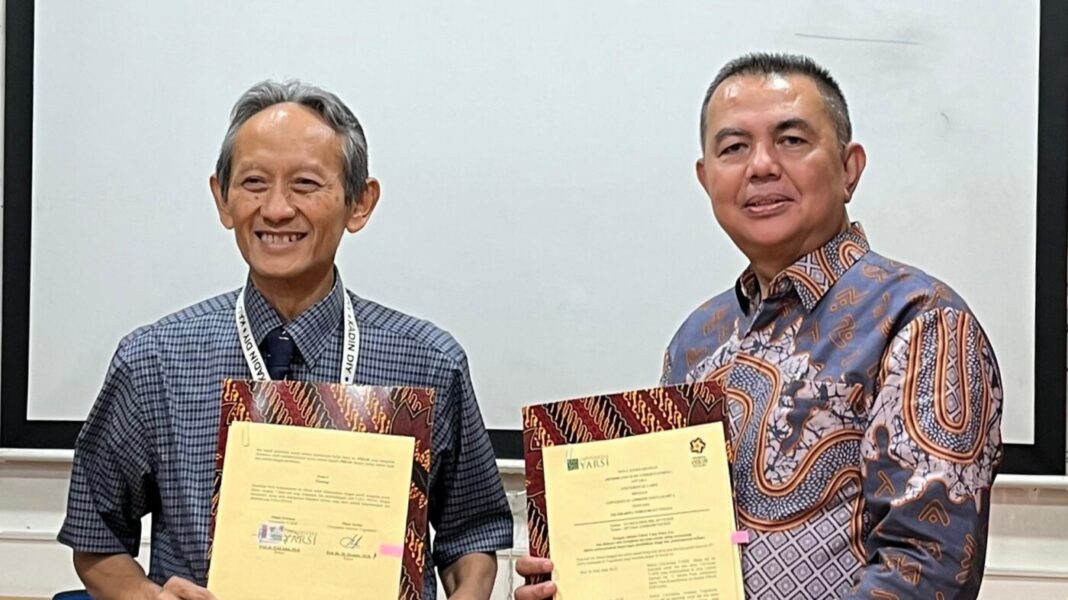
Strategic academic partnerships are reshaping Indonesia’s higher education landscape, particularly when they target sustainable development initiatives. The recent collaboration between Universitas YARSI and Universitas AMIKOM Yogyakarta exemplifies how universities are leveraging Green Waqaf research to drive meaningful social impact.
**Key Points**
- Five-year MOU signed covering education, research, and community service collaboration
- Focus Group Discussion on Green Waqaf tourism model scheduled for July 25, 2025 in Wonosari, Gunungkidul
- Partnership utilizes Group Model Building (GMB) approach supported by government research grants
- Strategic alliance aims to strengthen research capacity and institutional development
YARSI Strengthens Academic Collaboration Through MOU with Universitas AMIKOM Yogyakarta
What Does This Partnership Represent Beyond Traditional Academic Cooperation?
This collaboration transcends conventional university partnerships, positioning itself as a strategic response to Indonesia’s growing need for impactful social research. Prof. Dr. H. Nurul Huda, S.E., M.M., M.Si., Vice Rector IV of Universitas YARSI, emphasized that the partnership extends beyond mere academic courtesy to encompass genuine responsibility for collaborative research initiatives, particularly those with social impact like Green Waqaf.
The MOU signing ceremony featured key academic leaders from both institutions, including Prof. dr. Fasli Jalal, Ph.D. as YARSI’s Rector and Prof. Dr. M. Suyanto, M.M. representing AMIKOM Yogyakarta. Consequently, the agreement establishes a comprehensive framework spanning education, research, and community service for a five-year period, with renewal options based on mutual agreement.
Research Grant Implementation Strategy
Universitas YARSI is currently developing research initiatives based on the Group Model Building (GMB) approach, supported by grants from Indonesia’s Ministry of Education, Culture, Research, and Technology. Prof. Nurul explained that this partnership provides the strategic foundation needed to implement these research programs effectively.
How Will the Green Waqaf Tourism Model Be Developed?
The Research Implementation Cooperation Plan (RIKS) specifically outlines a Focus Group Discussion scheduled for July 25, 2025, in Wonosari, Gunungkidul. This event will explore the “Strategic Model for Implementing Green Waqaf in Halal Tourism in Indonesia’s Waqaf City using the Group Model Building (GMB) Approach.”
The signing involved Emha Taufik Lutfi, S.T., M.Kom., Ph.D., Dean of the Faculty of Social Economics at Universitas AMIKOM Yogyakarta, alongside Prof. Nurul, demonstrating institutional commitment at multiple organizational levels.
Implementation Framework and Methodology
The collaborative research approach centers on practical implementation rather than theoretical exploration alone. Prof. Nurul noted that YARSI possesses research grants requiring strategic partners for realization, positioning AMIKOM as the ideal collaborator for this initiative.
Why Does AMIKOM View This Partnership as Strategically Significant?
Arief Setyanto, S.Si., M.T., Ph.D., Vice Rector IV of Universitas AMIKOM Yogyakarta, welcomed the MOU and RIKS as the foundation for productive collaboration. He emphasized that meaningful partnerships must include implementative activities that generate tangible impact.
*The commitment extends far beyond ceremonial agreements.*
Dr. Arief stressed that every collaboration must progress beyond signing ceremonies to include implementative activities, whether through consortium research, downstream applications, or resource development. This philosophy aligns with AMIKOM’s vision of digital innovation and community-focused solutions.
Institutional Learning and Development Focus
AMIKOM’s leadership expressed readiness to learn from YARSI’s experience, particularly in strategic planning and institutional strengthening. Dr. Arief acknowledged that as a relatively young institution, AMIKOM values opportunities for knowledge exchange and insight sharing with more established universities.
The collaboration specifically targets collaborative research agendas related to Green Waqaf and sharia tourism development, areas where both institutions can contribute unique expertise and resources.
What Makes the Group Model Building Approach Innovative?
Dr. Arief highlighted the innovative nature of Prof. Nurul’s Group Model Building research methodology, noting its alignment with AMIKOM’s focus on digital innovation and community solutions. This approach represents a systematic method for engaging stakeholders in collaborative problem-solving processes.
The GMB methodology facilitates comprehensive stakeholder engagement, enabling researchers to develop more robust and implementable solutions for complex social challenges like sustainable tourism development through Islamic finance mechanisms.
Bottom Line
This strategic partnership between Universitas YARSI and Universitas AMIKOM Yogyakarta demonstrates how Indonesian universities are evolving beyond traditional academic boundaries to address pressing social challenges. The focus on Green Waqaf research and sustainable tourism development positions both institutions at the forefront of socially impactful academic collaboration.
Moving forward, the success of this partnership will be measured not through ceremonial achievements but through tangible research outcomes and community impact. The July 2025 Focus Group Discussion in Wonosari represents the first concrete step toward realizing the collaborative vision both institutions have articulated.