
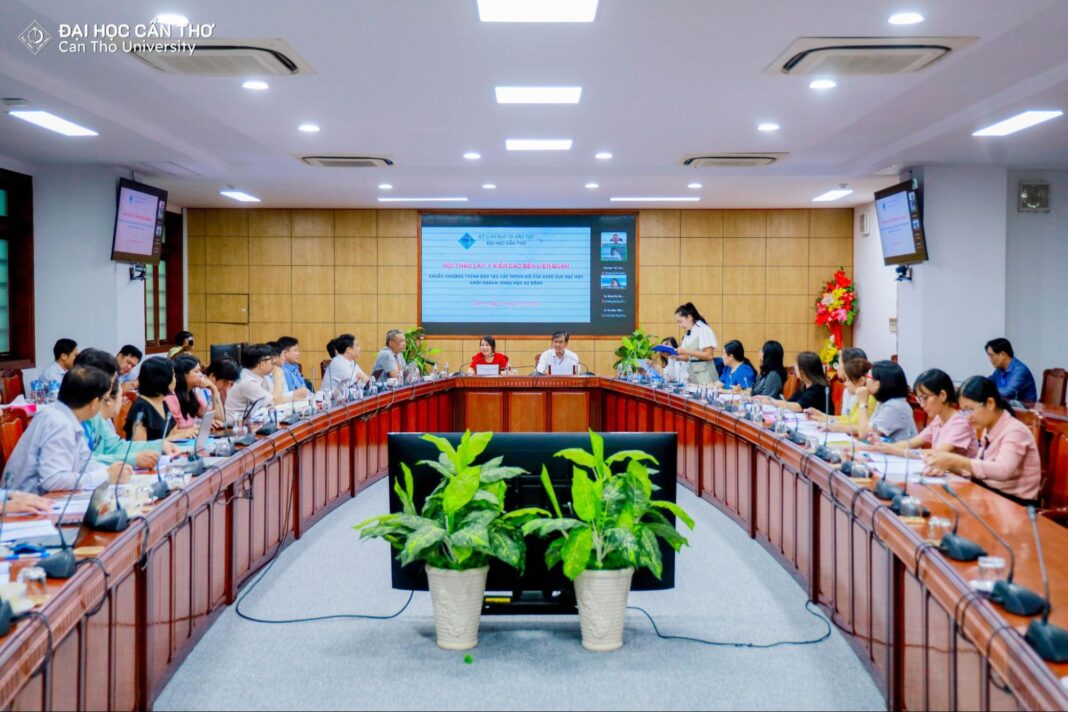
Can Tho University has taken the helm in developing national training standards for Life Sciences programs, marking a pivotal step toward modernizing Vietnam’s higher education system. Moreover, this initiative represents a strategic effort to align academic curricula with international benchmarks while addressing domestic workforce demands.
Can Tho University Leads Development of Life Sciences Training Standards
As the designated lead institution by the Ministry of Education and Training, Can Tho University (CTU) is spearheading the development of training program standards for undergraduate, master’s, and doctoral levels in the Life Sciences cluster. This strategic mission creates a unified foundation for designing, developing, and enhancing program quality to meet high-quality human resource demands in this critical field.
Collaborative Workshop Gathers Multi-Stakeholder Input
On the afternoon of October 14, 2025, CTU organized a comprehensive stakeholder consultation workshop regarding the draft training program standards for Bachelor’s, Master’s, and Doctoral degrees in Life Sciences. Furthermore, the program systematically collected multi-dimensional feedback from scientists, training institutions, enterprises, and relevant stakeholders to refine output standards and curriculum structure.
The workshop aimed to meet educational innovation requirements while establishing strong connections with socio-economic development realities and both domestic and international labor market needs. Unlike traditional academic planning, this approach emphasizes practical application and industry relevance.
Distinguished Leadership and Virtual Participation
Associate Professor Dr. Tran Trung Tinh, CTU Rector and Chairman of the Training Standards Development Council, presided over the event alongside Associate Professor Dr. Dam Sao Mai, Vice Rector of Ho Chi Minh City University of Industry and Advisory Council member. The hybrid format accommodated Dr. Nguyen Thi Thu Thuy, Deputy Director of the Higher Education Department at the Ministry of Education and Training, who participated online with university representatives, research institutes, and enterprise delegates.
Strategic Importance of Life Sciences in Modern Society
Life Sciences plays a crucial role in addressing major challenges facing modern society. This foundational field demonstrates high applicability, closely linking with sustainable agriculture development, biotechnology, biomedical sciences, and biodiversity conservation. In the context of deep international integration and increasingly demanding innovation requirements, enhancing training quality in this cluster not only contributes to developing high-quality human resources but also directly promotes socio-economic development.
“CTU plays a coordinating, connecting, and synthesizing role for professional resources from training institutions, research institutes, and Life Sciences experts to ensure unity, synchronization, and quality in the training standards development process,” emphasized Associate Professor Dr. Tran Trung Tinh during his opening remarks.
Competency-Based Framework Aligned with National Standards
The three draft training standards for Bachelor’s, Master’s, and Doctoral levels follow orientations consistent with the national qualification framework. Additionally, they ensure connectivity and capacity development while adhering to outcome-based education models and targeting international standards. CTU commits to fully incorporating valuable feedback to perfect the training standards, ensuring maximum scientific rigor, practicality, and feasibility.
Key Discussion Areas and Implementation Considerations
During the workshop, organizers presented the competency-based approach for developing training standards, ensuring flexibility, modernity, and international integration. Participants actively discussed and contributed substantial feedback on several critical areas:
- Output standards structure and scope definition
- Connectivity mechanisms between the three academic levels
- Technology integration, data management, and biosafety protocols
- Feasibility assessment for nationwide implementation
These discussions reflected the complexity of creating comprehensive biotechnology education frameworks that balance theoretical knowledge with practical application.
Practical Outcomes and Future Implementation
Associate Professor Dr. Dam Sao Mai concluded the workshop by acknowledging the valuable, profound, and practical contributions gathered during the intensive working session. This important information provides the Training Standards Development Council with a solid foundation for analysis, incorporation, and appropriate adjustments to perfect the standards across all three levels.
As a leading training, research, and technology transfer center in the Mekong Delta region, CTU develops and implements curricula connected to practical needs. On the flip side, the university promotes applied research and collaboration with enterprises, localities, and international organizations to develop human resources with innovative capacity meeting development requirements in an integration context.
Long-Term Vision for National Competitiveness
Investment in developing the Life Sciences cluster contributes not only to enhancing national competitiveness but also supports building ecological agriculture, advanced biotechnology, and innovation ecosystems serving the country’s long-term prosperity. This comprehensive approach aligns with global trends toward sustainable biotechnology development and knowledge-based economies.
Through this groundbreaking initiative, Can Tho University demonstrates its commitment to educational excellence and practical relevance in Life Sciences training. The collaborative development of these standards represents a significant step toward creating a more integrated, internationally competitive higher education system that addresses both current workforce needs and future innovation challenges. As Vietnam continues its economic transformation, these enhanced training standards will play a vital role in developing the skilled professionals necessary for sustainable growth and technological advancement.