
Have you ever wondered how universities across Southeast Asia are revolutionizing education through technology? The recent gathering of academic leaders at the University of the Philippines offers fascinating insights into the future of personalized learning—and reveals both the promise and pitfalls of integrating AI into education.
Student Engagement and Technology-Enhanced Personalized Learning Takes Center Stage at International Symposium
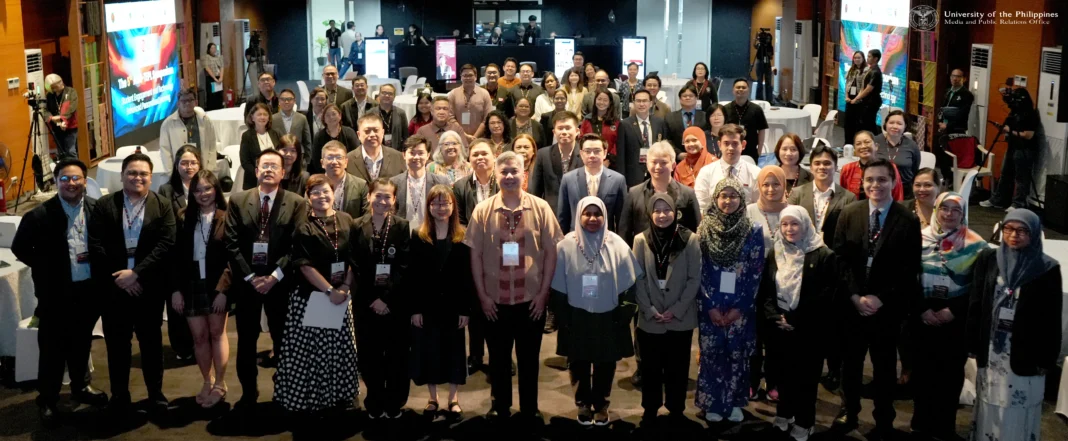
The hybrid 5th AUN-TEPL Symposium, held on October 2 at the University of the Philippines Bonifacio Global City in Taguig, brought together more than 200 university officials, faculty, students, and staff from across the ASEAN region. Meanwhile, participants joined both on-site and online, with delegates representing prestigious institutions including Singapore Management University, Universiti Malaya, Universiti Brunei Darussalam, Mahidol University, and UP.
The symposium served as a venue for international experts to share insights about strategies for leveraging technology in adapting learning experiences to suit individual student needs, with the goal of enhancing both engagement and outcomes.
Leadership Vision: Personalized Learning for Every Student
UP President Angelo Jimenez delivered a powerful message during the event, stating that “every student deserves an empowering, personalized, fair, and inclusive education.” He encouraged educators to pool expertise, share lessons, and design systems that respect diversity to close the digital gap, build trust, and ensure mutual progress.
This sentiment was echoed by AUN Executive Director Thanapan Laiprakobsup, associate professor of political science at Thailand’s Chulalongkorn University, who emphasized that “education can’t be one-size-fits-all.” As a result, integrating technology can create personalized pathways for learners while helping to advance ASEAN’s contributions to achieving the United Nations Sustainable Development Goals by “extending lifelong learning for all.”
The Promise and Limitations of AI in Education
Keynote speaker Dragan Gašević, professor of learning analytics at Australia’s Monash University, provided crucial insights into best practices and developing trends in technology-enhanced personalized learning. Among these innovations are generative AI and chatbots supporting students with information needs and tutorials—but Gašević was quick to point out important limitations.
“Chatbots alone are not fully equipped adaptive learning systems,” he explained. “These tools could provide quick information but they can’t replace educators… students need to know how to use the tools.” Furthermore, he noted that “Generative AI isn’t flawless,” which means AI-empowered skills rely on high human skills.
Nevertheless, the evidence shows promise. Generative AI provides automated and readable feedback, can help students formulate better essays, and assists in assessments while offering better insights for educators.
Collaborative Innovation Across ASEAN Universities
Singapore Management University professors Lieven Demeester, former Chairman of AUN-TEPL, and Tamas Makany, current Chairman, expressed optimistic views on teaching and learning innovations. They highlighted how “experimentation and data gathering becoming more personalized” through innovative technologies, sharing of digital resources, online courses, and collaborations among member universities.
“I see the AUN-TEPL becoming the go-to network, the leading platform, that will benefit all members,” said Makany.
Student-Driven Innovation in Action
The symposium also celebrated student creativity through the undergraduate competition “Great Ideas: Student-driven Technology-Enhanced Personalized Learning Showcase (STEPS).” Winning teams showcased their innovative “study hacks,” including:
- Timer apps for focused learning sessions
- Online spreadsheets for collaborative projects
- Gaming platforms for interactive learning
- Gamifying routine academic tasks
These student innovations demonstrated how learners themselves are driving personalized learning experiences through creative technology use.
Balancing Technology with Traditional Learning Methods
In his closing message, UP Diliman Chancellor Edgardo Carlo Vistan II offered a thought-provoking perspective on the relationship between technology and human intelligence. He noted that while society and institutions are always trying to catch up with newer technologies, “with AI in education, it is technology that is trying to catch up with human intelligence.”
Vistan reminded attendees that what AI attempts to mimic is often achieved without technologies. “Time-honored processes like memorization are key or indispensable in developing talented and highly skilled individuals,” he emphasized, highlighting the continued importance of foundational learning approaches alongside technological innovation.
Looking Ahead: AI Ethics in Focus
The AUN-TEPL steering committee met the following day to assess past activities and prepare for future initiatives. Significantly, they announced that Universiti Brunei Darussalam will host the 2026 symposium under the theme “AI Ethics in Personalized Learning”—a timely focus given the rapid advancement of artificial intelligence in educational settings.
As a thematic network under the AUN and hosted by Singapore Management University, the AUN-TEPL continues to foster deeper collaboration and sharing of expertise among ASEAN universities.
The Path Forward for Educational Excellence
This international symposium on student engagement and technology-enhanced personalized learning revealed both exciting opportunities and important considerations for the future of education. For example, while AI tools offer unprecedented capabilities for customizing learning experiences, they work best when combined with strong human guidance and traditional pedagogical foundations.
The collaborative spirit demonstrated by ASEAN universities shows how institutions can work together to create more inclusive, effective educational systems. As we move toward an increasingly digital future, the challenge lies in harnessing technology’s power while preserving the irreplaceable human elements that make learning truly transformative. What role will your institution play in shaping this educational evolution?