
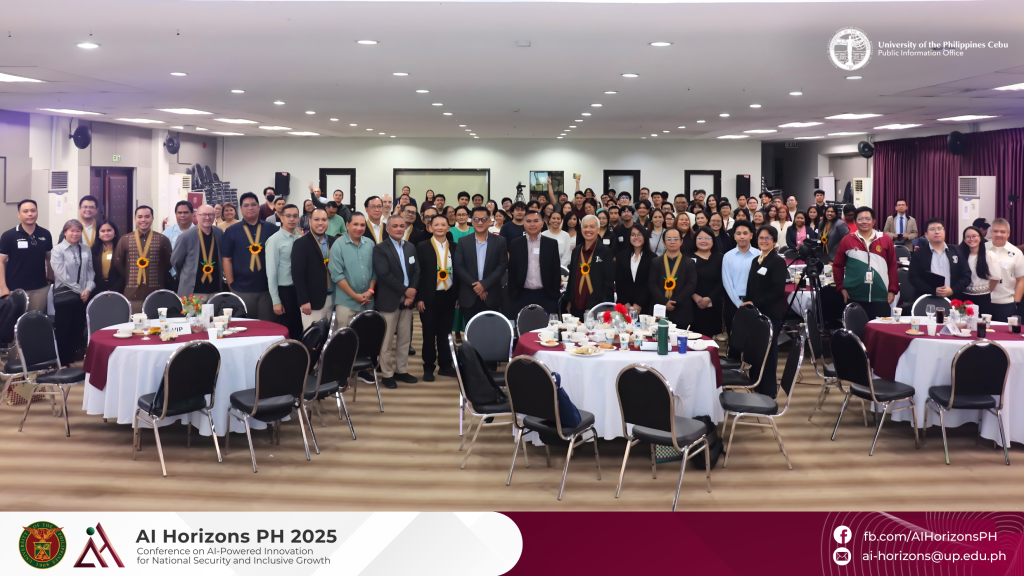
We step into a packed auditorium in UP Cebu, where over 300 leaders from across the Philippines have gathered for a critical conversation about our nation’s AI future. The air buzzes with anticipation as university presidents, industry executives, and government officials prepare to tackle one of the most pressing questions of our time: who will artificial intelligence truly serve?
AI Must Serve the Many, Not Merely the Few: UP President’s Vision for Inclusive Innovation
Catalyst
The spark for this urgent dialogue came from a growing realization that artificial intelligence could either bridge or widen the nation’s inequality gap. University of the Philippines President Angelo Jimenez stepped to the podium at the second AI Horizons PH conference with a powerful challenge for the assembled crowd.
“What we need is something rare: will,” Jimenez declared to the diverse audience of leaders from academe, industry, government, and civil society. “Political will to invest in digital infrastructure. Educational will to transform curricula … Economic will to invest in homegrown innovation, and collective will to ensure that AI serves the many, not merely the few.”
This year’s conference, held October 16-17 in UP Cebu, deliberately chose the Philippines’ leading business process outsourcing hub outside Metro Manila to empower direct engagement with industries and communities most affected by AI transformation.
Rising Action
As the conference unfolded, a series of challenges emerged that painted a complex picture of the Philippines’ AI landscape. UP Cebu Chancellor Leo Malagar raised the stakes by emphasizing that innovation cannot be sustainable “if it forgets the people for whom it was made.” His words resonated through the venue: “No algorithm is ethical if it serves only the powerful.”
Over two intensive days, the conference tackled four critical sectors through dedicated plenary sessions: BPO and creative industry transformation; public governance and disaster risk reduction management; social good and inclusive growth; and cybersecurity and national security.
Michelle Alarcon, president of the Analytics and Artificial Intelligence Association of the Philippines, opened the first session with her keynote presentation on the Philippine Skills Framework for Analytics and AI. She underscored the importance of building a future-ready national AI workforce by developing and supporting local talent.
“We need to build this very strong ecosystem to achieve our own ambitions of having our own sovereign AI,” Alarcon said. “No one else will build this for us except us.”
The urgency became more apparent during the session exploring AI applications in public governance and disaster risk reduction management. This discussion proved especially timely following the devastating 6.9-magnitude earthquake that hit Cebu on September 30, as well as recent corruption issues plaguing the country’s flood control and other public infrastructure projects.
Turning Point
The breakthrough moment came when speakers began connecting AI’s technical capabilities to deeply human needs.
Prof. Czar Jakiri Sarmiento, deputy executive director of the UP National Engineering Center, delivered a pivotal insight during his keynote. He emphasized that the use of technology in governance “must amplify human values, not efficiency for its own sake, but fairness, accountability and empathy in public service.”
Meanwhile, Dr. Johanna Patricia Cañal of the UP Philippine General Hospital opened the session on social good and inclusive growth with revelations about transformative developments in radiology and medical imaging. Her presentation highlighted how artificial intelligence opens vast opportunities for research and collaboration between medical experts and computer scientists.
“Can you imagine the number of data points we have and all the potential research we can do?” Dr. Cañal asked. “My job is to talk to the computer scientist, to talk to the developer and tell the developer what we need, because that’s precisely where AI can come in and that is where AI will be most useful.”
Resolution
The conference’s final session addressed cybersecurity and national security, bringing the discussion full circle to the question of equitable access. Rowen Gelonga, regional director of the Department of Science and Technology Region VI, delivered the keynote on the AI Development Action Plan of Western Visayas.
Emphasizing the significance of strengthening regional participation in AI research and development, Gelonga called for the democratization and allocation of more resources in the regions. His message was clear: “We really have to prioritize [the] development of AI solutions to address the requirements of the most disadvantaged sectors.”
By the conference’s end, a consensus had emerged among participants. The path forward requires not just technological advancement, but a fundamental commitment to inclusive innovation that prioritizes the needs of ordinary Filipinos over the convenience of the powerful.
The conversations that began in UP Cebu must now extend beyond conference halls into boardrooms, classrooms, and government offices across the archipelago. As we stand at this crossroads of technological possibility, the question remains: will we choose the political, educational, economic, and collective will necessary to make artificial intelligence serve every Filipino, not just the privileged few? The future of AI development in the Philippines depends on how we answer this challenge, and resources like the University of the Philippines Cebu continue to lead these crucial discussions.