
A groundbreaking digital education initiative is reshaping how Southeast Asia approaches artificial intelligence literacy. The ASEAN Foundation has officially launched AI Class ASEAN, an ambitious e-learning platform designed to democratize AI education across the region, with Malaysia serving as the inaugural host for this transformative program.
ASEAN Foundation Launches AI Class ASEAN Platform in Malaysia with Google.org Support
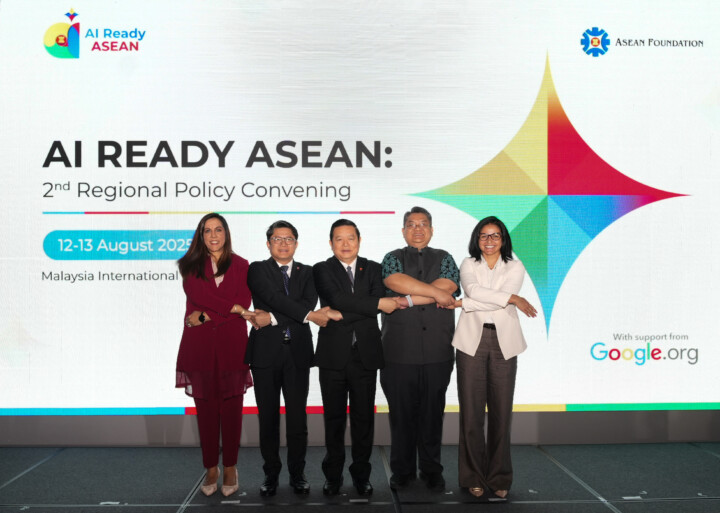
The ASEAN Foundation, backed by substantial support from Google.org, officially unveiled AI Class ASEAN during the 2nd Regional Policy Convening of AI Ready ASEAN. This landmark event took place on August 12-13 in Kuala Lumpur, Malaysia, marking a pivotal moment in Southeast Asia’s digital transformation journey.
Moreover, this new e-learning platform represents one of the key milestones of AI Ready ASEAN, a comprehensive 2.5-year regional programme powered by a RM23.9 million (USD 5 million) grant from Google.org. The initiative aims to equip young people, educators, and parents with essential skills to promote the inclusive and responsible adoption of artificial intelligence across ASEAN.
Ambitious Goals Drive Regional Digital Transformation
With an ambitious target of upskilling over 5.5 million learners, the platform represents a major leap forward in advancing AI literacy in Southeast Asia. Unlike traditional educational approaches, this initiative emphasizes accessibility and cultural relevance through localized content delivery.
In Malaysia specifically, the programme operates through Local Implementing Partners (LIPs), including Universiti Teknologi Petronas – ASEAN Student Association (UTP-ASEAN Student Association) and Kolej Tingkatan Enam Tun Fatimah (KTETF). These partners have collaborated extensively with schools and universities to introduce foundational AI concepts and support the development of digital literacy among students, educators, and parents.
Addressing Critical Regional Needs
As AI reshapes economies and education systems globally, the demand for safe, inclusive, and responsible deployment comes both timely and imperative. Furthermore, stakeholders must collaborate to legislate new policies and introduce innovative learning methods that will unlock benefits and help make the ASEAN Community AI-ready.
An example of this strategic approach is AI Class ASEAN, which is poised to turn this vision into reality. The platform provides free training through 70 localised modules designed to meet the evolving needs of the region. Driven by an AI-powered chatbot, discussion forums, and real-time translation support that facilitates collaborative, multilingual learning, AI Class ASEAN represents a multifaceted regional initiative.
“At the ASEAN Foundation, we believe that empowering our communities with the right knowledge and skills is the key to a future-proof ASEAN. AI Class ASEAN delivers opportunity, inclusion, and shared progress, transforming ASEAN into a more resilient, better-informed, and more connected region,” stated Dr Piti Srisangnam, Executive Director of the ASEAN Foundation.
High-Level Launch Ceremony Marks Historic Moment
Under the theme “Bridging AI Literacy and AI Safety: Building Responsible AI in ASEAN”, the two-day convening brought together policymakers, educators, youth leaders, civil society organisations, and private sector experts. The programme featured keynote speeches, panel discussions, a talk show, networking sessions, and the official launch of this flagship digital learning initiative.
The launch was symbolically marked through a ceremonial press of the launch button by key stakeholders, including H.E. Gobind Singh Deo, Minister of Digital of Malaysia; H.E. Dr Kao Kim Hourn, Secretary-General of ASEAN; H.E. Ambassador Sitsangkhom Sisaketh, Chair of the Board of Trustees of the ASEAN Foundation; Dr Piti Srisangnam, Executive Director of the ASEAN Foundation; and Ms Sapna Chadha, Vice President for Southeast Asia and South Asia Frontier, Google Asia Pacific.
Additionally, the ceremony was witnessed by representatives from the ASEAN Working Group on AI, ASEAN Senior Officials Meeting on Education, ASEAN Secretariat, and AI Ready ASEAN’s local implementing partners.
Prime Ministerial Recognition Highlights National Importance
Following its official launch at the 2nd Regional Policy Convening, AI Class ASEAN was unveiled as the flagship initiative at the ASEAN AI Malaysia Summit 2025, in the presence of The Honourable Datuk Seri Anwar Ibrahim, Prime Minister of Malaysia. This moment underscored the significance of the e-learning platform and the broader AI Ready ASEAN programme in equipping Malaysia’s current and future generations with essential digital skills.
Measurable Impact Across Southeast Asia
Since its inception, AI Ready ASEAN has achieved considerable progress in promoting basic AI literacy. Through its Hour of Code (HoC) campaigns, over 400,000 beneficiaries across 10 ASEAN countries have benefited from foundational AI concepts. Regional Local Implementing Partners have played a key role in these efforts by building strong local networks across universities, schools, government agencies, and community organisations.
“We see AI not just as a tool, but as a catalyst for inclusive progress when used responsibly. At Google.org, we are supporting programmes like AI Ready ASEAN to ensure that foundational AI education reaches those who have the most to gain from it,” said Marija Ralic, Head of Google.org Asia Pacific.
Local Implementation Success Stories
Leading Malaysia’s local implementation efforts, UTP-ASEAN Student Association builds on its grassroots legacy of digital empowerment. The organization previously advocated for SDG 4: Quality Education through STEM workshops, university outreach, and digital inclusion efforts in rural and indigenous communities.
In collaboration with the Ministry of Higher Education, Malaysia Digital Economy Corporation (Premier Digital Tech Institutions, PDTI), and MARA Secondary Education Division, the association now aims to equip at least 250,000 Malaysians with foundational AI knowledge while promoting responsible AI use.
Comprehensive Training Programs Yield Results
Through national initiatives such as the HoC campaign, AI training, and the AI Ready ASEAN Camp, the program continues to nurture a future-ready generation of ethical and inclusive AI leaders. The initiative aims to reach 10,640 beneficiaries by the end of August, demonstrating its rapid scaling capabilities.
“We envision the AI Ready ASEAN programme as a catalyst for AI literacy in Malaysia, empowering youth, educators, and local communities to understand and leverage artificial intelligence in meaningful and ethical ways,” stated Wong Soon Ping, Project Supervisor (AI Ready ASEAN) of UTP-ASEAN Student Association.
Meanwhile, KTETF has made remarkable strides in educator development. In collaboration with the Ministry of Education, Malaysia Digital Economy Corporation, universities, and NGOs, it has trained and certified over 100 educators to integrate AI into their respective co-curricular activities, reaching 46,583 participants across 200 schools.
Building Sustainable Digital Futures Through Partnership
Through YouTube Live sessions, AI competitions, and incentives, KTETF promotes ethical and practical applications of AI. Looking ahead, the organization plans to embed the programme in Learning Management Systems to ensure long-term sustainability and broader reach.
AI Ready ASEAN exemplifies how strategic partnerships can drive meaningful change. Through cross-sector collaboration and grassroots engagement, ASEAN is building a future where digital literacy and AI fluency are not privileges, but shared opportunities to equip the community with essential 21st-century skills.
This comprehensive initiative demonstrates that when regional organizations, technology companies, and educational institutions unite around a common vision, they can create transformative programs that prepare entire communities for the digital future. As AI continues to reshape industries and societies, platforms like AI Class ASEAN serve as essential bridges between current capabilities and future possibilities, ensuring that Southeast Asia’s diverse populations can participate meaningfully in the AI revolution.