

Academic publishing demands precision, yet many faculty struggle to navigate international journal standards. A recent coaching clinic at Universitas Nusa Cendana revealed critical strategies that could transform how Indonesian academics approach scholarly publication.
**Key Points**
- Daily reading of 2-3 recent articles from international journals is essential for competitive research
- Five key rejection factors: improper problem formulation, lack of originality, flawed research design, and ethical approval issues
- Introduction and discussion sections require the most strategic attention from authors
- Structured five-paragraph introductions should cover state of the art, research gaps, novelty, and contributions
How Indonesian Faculty Are Mastering International Journal Publication Strategies
Why does academic publication coaching matter for Indonesian universities?
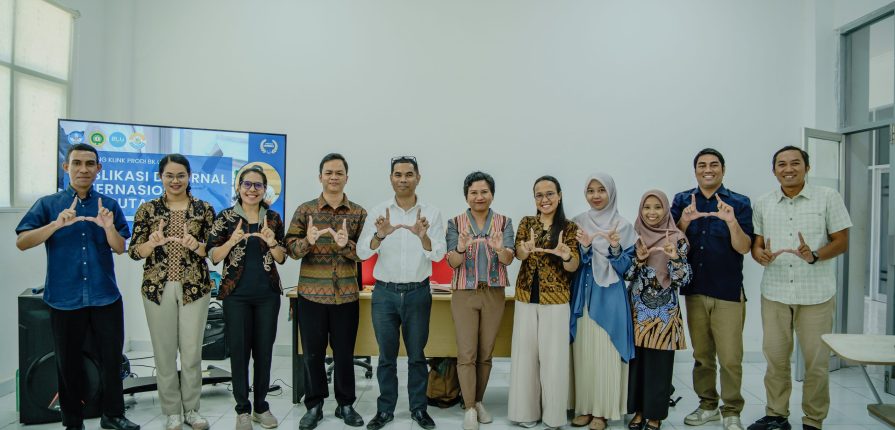
On October 24, 2025, the Guidance and Counseling Study Program at FKIP Universitas Nusa Cendana hosted an intensive coaching clinic focused on international journal publication strategies. Consequently, fifteen faculty members received direct mentoring from Dr. Zummy Anselmus Dami, M.Pd., an established writer and reviewer for reputable international journals.
The comprehensive session covered writing techniques, publication strategies, and scientific ethics through presentations, discussions, and hands-on manuscript development. Additionally, participants received guidance on reference management and reviewer response strategies.
What fundamental writing habits must academics change?
Literature-First Approach Replaces Field Observation
Dr. Zummy identified a critical flaw in traditional academic writing approaches. Rather than starting with field phenomena, successful authors must read at least one article from the past two to three years daily.
“Now change that habit by finding out and reading publication articles published in reputable international journals, so don’t just rely on events in the field,” he emphasized.
Four Critical Success Factors
Several crucial elements determine publication success: novelty, clear scope and focus, regional scope, and appropriate participant selection. Meanwhile, the primary rejection reasons include improper problem formulation, insufficient originality, and flawed research design or ethical approval.
Which sections demand the most strategic attention?
Results-First Writing Sequence
For Scopus-indexed journals, Dr. Zummy recommended a specific writing order focusing on findings, methodology, and discussion, concluding with title and abstract development. Notably, he identified introduction and discussion as the most challenging sections.
Five-Paragraph Introduction Structure
The introduction requires precise organization across five paragraphs covering state of the art, research gaps, novelty, and contributions or solutions.
Efficiency matters more than elaborate explanations when addressing busy, unpaid editors and reviewers.
Furthermore, discussion sections must position findings within comprehensive, critical contexts while explicitly comparing results with previous related research to strengthen or contradict existing knowledge.
- Read recent international journal articles daily
- Focus on results and methodology first
- Structure introductions strategically
- Write one paragraph consistently per day
Bottom Line
This coaching clinic represents a systematic approach to elevating Indonesian academic publishing standards through practical, actionable strategies. The emphasis on daily reading habits and structured writing processes addresses fundamental barriers that prevent faculty from achieving international publication success.
By implementing these evidence-based techniques, Universitas Nusa Cendana faculty can build productive, professional academic cultures that compete effectively in global scholarly communities. The focus on consistency and persistence in daily writing practice offers a realistic pathway for sustained international journal publication achievement.