
The fossil fuel era’s replacement is raising new red flags as Southeast Asian communities challenge the environmental and social costs of mineral extraction justified under green transition narratives. Regional voices are uniting to expose what they term “green colonialism” disguising corporate profit as climate action.
**Key Points**
* Six Southeast Asian countries participated in regional dialogue at Undana University addressing women, mining, and extractivism
* Critical mineral extraction for green technology is identified as a new form of green colonialism
* Women bear the heaviest burden of ecological damage while serving as frontline defenders of natural resources
* Green energy solutions paradoxically rely on fossil fuel-powered extraction in Indonesia
* Cross-border solidarity emerges as essential for challenging false energy transition narratives
Green Colonialism Takes Center Stage as Undana Hosts Southeast Asian Regional Discussion on Women, Mining, and Extractivism
Why did Southeast Asian activists converge in Kupang?
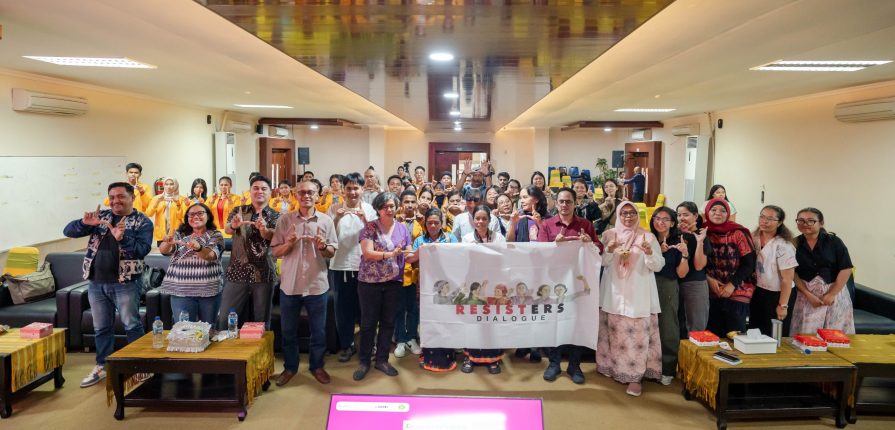
Universitas Nusa Cendana (Undana) became a strategic meeting point for academics, activists, and community representatives from six Southeast Asian countries during a Public Dialogue themed “Women, Mining, and Extractivism in Southeast Asia” on Saturday (1/11/2025) at the Undana Rectorate Hall. Consequently, this gathering collectively voiced deep concerns about critical mineral extraction practices identified as a new form of green colonialism.
The dialogue, initiated by the Indonesian Women and Mining Working Team (TKPT Indonesia) and ReSisters Dialogue Network, aimed to formulate tactical steps against the wave of investments claiming to support global energy transition.
What criticisms emerged regarding false energy transitions?
Cross-sector solidarity gains momentum
TKPT Indonesia Chair, Dr. Haris Retno Susmiyati, S.H., M.H., explained the importance of this forum for expanding cross-sector solidarity in fighting for justice for women who become victims of extractive industries.
Similarly, Judy Pasimio from ReSisters Dialogue criticized existing energy transition narratives, where mineral extraction (such as lithium and nickel mining) is claimed as part of green transition, when it often merely expands large corporate profits. She emphasized that cross-border solidarity is crucial for pursuing justice.
University leadership acknowledges exploitation risks
The event was officially opened by Undana’s Vice Rector IV for Planning and Cooperation, Prof. Dr. Ir. Jefri S. Bale, S.T., M.Eng, who expressed appreciation for the collaboration and highlighted new exploitation risks potentially generated by green energy transition narratives affecting natural resources and their direct impact on women.
“This dialogue becomes an important space for campuses to play active roles in global issues, particularly those concerning environmental sustainability and social justice,” concluded Prof. Jefri.
How do women experience extractive industry impacts?
Frontline testimonies reveal dual burden
Discussion sessions featured “Voices from Energy Investment Regions,” presenting direct testimonies from community representatives and activists from the Southeast Asian ReSisters Dialogue network, including participants from Indonesia, Thailand, and Myanmar/Burma.
These testimonies confirmed that women are the most vulnerable group bearing the burden of ecological losses, while simultaneously serving as the frontline defenders in protecting and restoring life sources amid extractivism threats.
Academic analysis exposes transition paradox
During the panel session, Norman Riwu Kaho, SP., M.Sc., Forestry Program Lecturer at Undana, delivered critical analysis regarding energy transition paradoxes. Notably, he highlighted that global green technology solutions require critical minerals whose extraction in Indonesia is actually supported by fossil fuels and transfers environmental and social impacts, such as water crises and land grabbing, to vulnerable communities in East Nusa Tenggara.
*The stakes for authentic sustainability couldn’t be higher.*
Bottom Line
This public dialogue successfully brought together women’s voices, academics, and civil society in affirming that true sustainability can only be achieved by prioritizing people and environment, while serving as Southeast Asia’s collective call to build a just, sustainable future free from green colonialism forms. The regional coalition demonstrates growing resistance to green colonialism practices that exploit developing nations under environmental pretexts.
Moving forward, the cross-border solidarity established through this dialogue creates a foundation for challenging corporate narratives that disguise profit motives as climate solutions, ensuring that genuine energy transitions prioritize community welfare over extractive industry expansion.