


The future of global hospitality may well lie in the time-honored traditions of Asian service excellence. This compelling vision took center stage at Mae Fah Luang University’s recent international forum, where industry leaders and educators gathered to explore how Asian hospitality principles are reshaping tourism education and practice worldwide.
MFU Hosts THE-ICE IPoE Forum 2025, Highlighting “Asian Hospitality” as the Future Direction
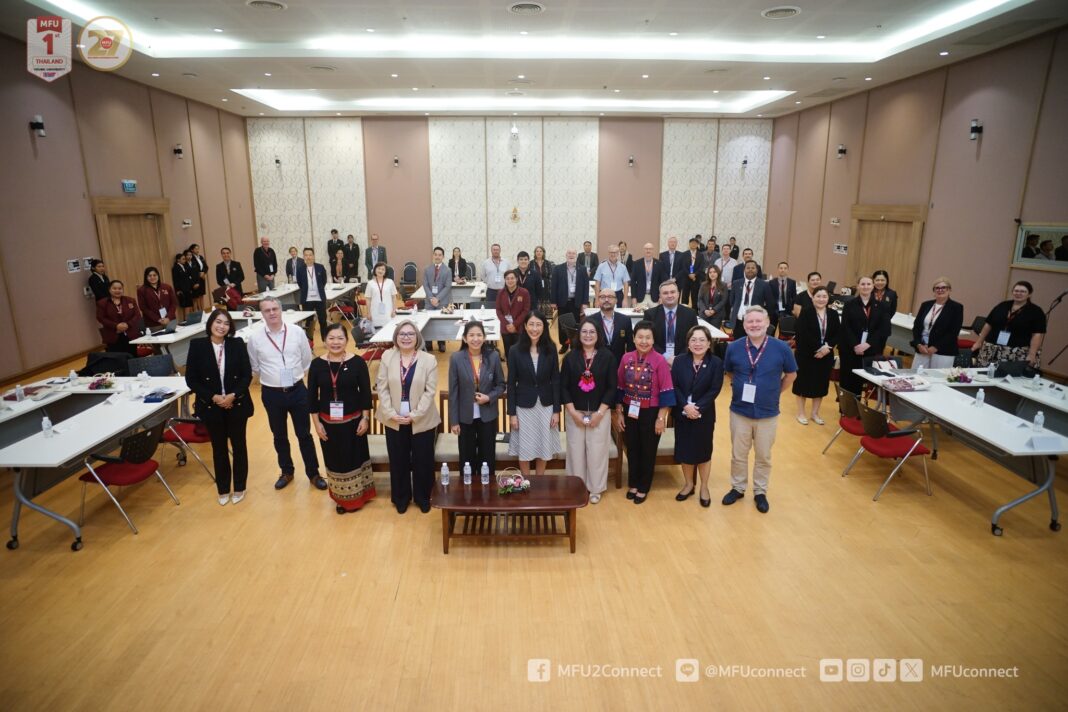
Mae Fah Luang University (MFU) proudly hosted the 18th THE-ICE International Panel of Experts (IPoE) Forum 2025 from October 19–21, 2025, spanning both the M-Square Building on campus and Le Méridien Chiang Rai Resort. Under the comprehensive theme ‘Adapting to Global Shifts: Innovating Tourism and Hospitality Education for a Sustainable Future’, this premier gathering brought together renowned academics, university executives, and industry leaders from across the globe.
Distinguished Leadership Opens Dialogue on Educational Innovation
Assoc. Prof. Dr. Darunee Wattanasiriwech, Vice President of MFU, presided over the opening ceremony alongside distinguished guests including Dr. Piyatida Pianluprasidh, Dean of the School of Management, Dr. Craig Thompson, Chief Executive Officer of THE-ICE, and Ms. Gienke Osinga, Chair of THE-ICE Board of Directors.
In her welcoming remarks, Assoc. Prof. Dr. Darunee emphasized the timeliness of this year’s theme. She noted that the hospitality industry has undergone profound transformation under the forces of technology, climate change, and evolving social expectations. Moreover, these changes challenge educators and professionals to rethink how we teach, learn, and lead—ensuring the next generation possesses not only technical skills but also embodies values of sustainability, resilience, and empathy.
Asian Service Philosophy Takes Center Stage
A highlight of the forum was the keynote panel on “Asian Hospitality – Is it the Future of Hospitality?”, featuring senior executives from Anantara Golden Triangle Elephant Camp & Resort, Le Méridien Chiang Rai Resort, The Peninsula Bangkok, and Dubai College of Tourism. The discussion explored the essence of Asian hospitality—renowned for its warmth, attention to detail, and holistic care—and how these values are increasingly shaping the global hotel industry.
Unlike Western models that often prioritize efficiency, Asian hospitality emphasizes relationship-building and anticipatory service that creates lasting emotional connections with guests. This approach is gaining recognition as a competitive advantage in an increasingly commoditized industry.
Balancing Profit with Purpose in Modern Tourism
Another key plenary panel, “Re-examining the Triple Bottom Line-Balancing Social, Environmental and Economic Influences on the Tourism and Hospitality Industry”, brought together experts from Pacific Asia Travel Association (PATA) Thailand Chapter, Chayadol Resort, Dusit Thani College, and the Free University of Bozen-Bolzano, Italy. They examined how businesses can successfully balance economic growth, social responsibility, and environmental stewardship within the tourism and hospitality sectors.
Technology and Cross-Cultural Competency in Focus
The forum also featured a session on “Globalisation Trends and Cross-Cultural Competence in Tourism and Hospitality Education”, led by representatives from Thailand Convention and Exhibition Bureau (TCEB), National Institute of Development Administration (NIDA), César Ritz Colleges Switzerland, and Stream Events Asia Ltd. This discussion emphasized the critical need for developing intercultural skills among students to enhance their effectiveness in diverse global contexts.
Furthermore, experts from Phuket International Airport, Kempinski Hotels, and NIDA joined the conversation on “Innovations and Technological Advancements in Tourism, Hospitality, and Aviation”. This session focused on integrating digital technology, artificial intelligence, and innovation to enhance customer experience, improve operational efficiency, and create sustainable competitive advantages.
Research Initiatives Drive Educational Excellence
The event showcased cutting-edge research under the THE-ICE Research Grant Scheme (RGS) 2025, featuring studies on “Transforming Hospitality and Tourism Education Through Challenge Based Learning” and “Bridging Sustainability and Education: Integrating Sustainable Development Goals (SDGs) in Tourism and Hospitality Curricula” by scholars from Australia, Thailand, and the Philippines.
“Restore Forest, Cultivate People” – the philosophy of the late HRH Princess Srinagarindra that guides MFU’s commitment to sustainability
Cultural Immersion Enhances Learning Experience
Participants enjoyed an enriching Lanna cultural experience through a Campus Tour of MFU’s Botanical Garden and the Mekong Basin Civilization Museum. On the flip side of academic discussions, this hands-on exploration allowed attendees to witness MFU’s philosophy of “Restore Forest, Cultivate People,” inspired by the late HRH Princess Srinagarindra, reflecting the university’s deep commitment to sustainable tourism education.
Additionally, students from the School of Management had a valuable opportunity to showcase their skills in conference organization, food and beverage service, hospitality management, and tourism operations while hosting this prestigious international event.
Building Bridges for Future Collaboration
The THE-ICE IPoE Forum 2025 provided an invaluable platform for academics and industry professionals to strengthen international collaboration, exchange best practices, and shape the future direction of tourism and hospitality education. The focus remained firmly on sustainability, technological integration, and cultural value creation throughout all sessions.
As the host institution, Mae Fah Luang University reaffirmed its readiness to serve as a regional hub for international education and knowledge exchange, advancing excellence in hospitality and tourism education while staying aligned with global industry trends. The forum’s success demonstrates how Asian educational institutions are taking leadership roles in shaping worldwide hospitality standards and practices.
The conversations sparked at this forum underscore a fundamental shift in how we approach hospitality education and practice. As the industry continues evolving, the integration of Asian hospitality values with cutting-edge technology and sustainable practices may well define the next chapter of global tourism excellence. What aspects of Asian hospitality do you believe hold the greatest potential for transforming the international travel experience?

