
Vietnamese universities are expanding their international partnerships to strengthen global academic cooperation and technology transfer initiatives. A recent high-level diplomatic visit to Ho Chi Minh City University of Technology and Education demonstrates how educational institutions serve as bridges for bilateral relations.
**Key Points**
- Cuban National Assembly President visited HCMUTE as part of Vietnam-Cuba Inter-Parliamentary Cooperation Committee session
- University showcased innovative agricultural technology including UAVs for fertilization and smart farming solutions
- HCMUTE proposed comprehensive cooperation framework covering joint programs, research exchanges, and technology transfer
- AgriFood company, founded by university alumni, plans investment in Cuban agriculture and food technology sectors
Cuban National Assembly President Explores Vietnam-Cuba Educational Partnership at HCMUTE
Why did the Cuban delegation visit Ho Chi Minh City University of Technology and Education?
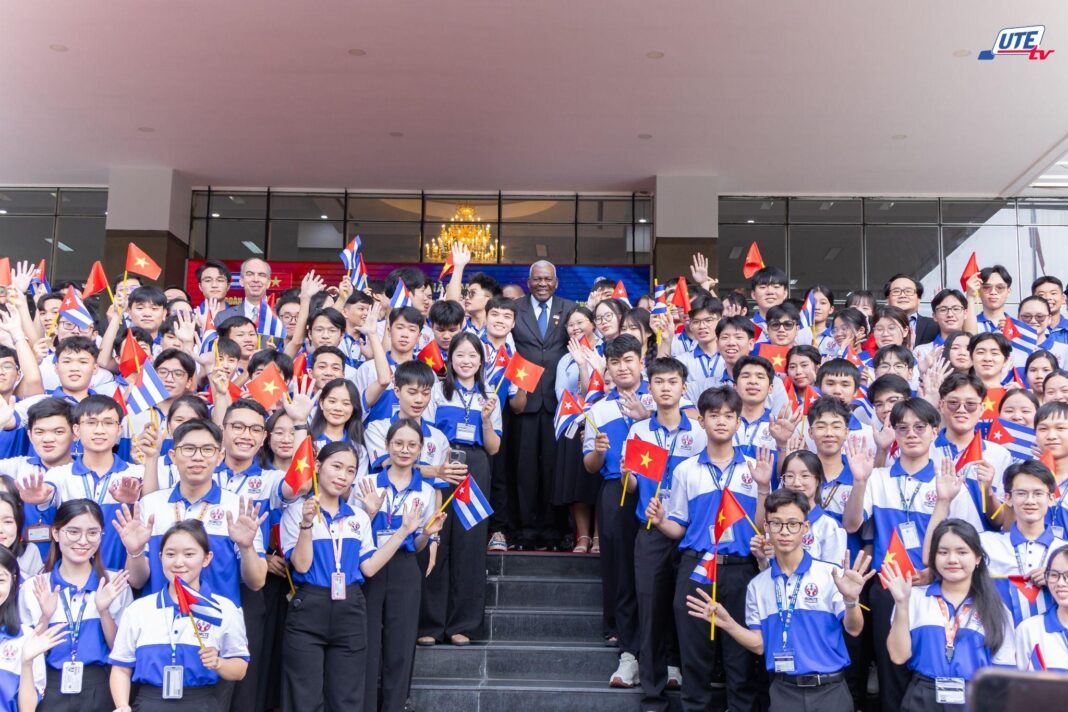
On October 3, 2025, H.E. Esteban Lazo Hernandez, President of the National Assembly of People’s Power and President of the Council of State of the Republic of Cuba, led a distinguished delegation to HCMUTE during his official visit to Vietnam. The visit formed part of his co-chairmanship role in the 2nd session of the Vietnam–Cuba Inter-Parliamentary Cooperation Committee.
The Cuban delegation included Secretary General H.E. Homero Acosta Alvarez and Ambassador H.E. Rogelio Polanco Fuentes, among other senior officials. Vietnamese representatives featured H.E. Nguyen Van Loi, Member of the Party Central Committee and Head of the 15th National Assembly Delegation of Ho Chi Minh City, alongside H.E. Vu Hai Ha, Chairman of the Vietnam–Cuba Parliamentary Friendship Group.
University Leadership Welcomes International Delegation
HCMUTE’s leadership team, headed by Dr. Truong Thi Hien, Secretary of the Party Committee and Chairwoman of the University Council, and Assoc. Prof. Dr. Le Hieu Giang, Deputy Secretary and University President, warmly received the delegation alongside faculty members and students.
What innovative technologies did HCMUTE showcase?
During the visit, university representatives highlighted cutting-edge agricultural innovations developed by faculty and students. Notably, HCMUTE demonstrated unmanned aerial vehicles (UAVs) designed for agricultural fertilization, showcasing the practical application of high technology in modern farming.
H.E. Nguyen Van Loi praised these technological developments, emphasizing how such projects embody the creativity and dedication of Vietnam’s young intellectual generation. Consequently, he expressed confidence that these concrete models could facilitate future research collaboration and smart agriculture technology transfer benefiting both nations.
Alumni Company Plans Cuban Investment
AgriFood, a company founded by HCMUTE alumni, emerged as a practical example of Vietnam-Cuba cooperation. The enterprise is currently planning investments in Cuba’s agriculture and food technology sectors, demonstrating how university graduates contribute directly to bilateral development initiatives.
What cooperation framework did HCMUTE propose?
Dr. Truong Thi Hien outlined HCMUTE’s comprehensive cooperation strategy during the meeting:
- Establish bilateral academic cooperation programs, including joint undergraduate and postgraduate training in mutually beneficial fields
- Organize student, faculty, and researcher exchange programs with academic semesters and research internships
- Co-develop research projects in renewable energy, hydrogen, telecommunications, food technology, and industrial digitalization
- Create joint academic forums, international conferences, and technology incubation programs for youth from both countries
Furthermore, she expressed hope for support from Cuban universities and research institutes in developing medical engineering programs. Recognizing Cuba’s renowned expertise in healthcare, pharmaceuticals, and biotechnology, the university sees significant potential for collaboration in these specialized fields.
The visit represents more than diplomatic courtesy—it signals a new chapter in practical educational cooperation.
How do Cuban officials view the partnership potential?
H.E. Homero Acosta Alvarez emphasized the enduring Vietnam-Cuba relationship, referencing Fidel Castro’s famous declaration: “For Vietnam, Cuba is willing to shed its own blood.” He described HCMUTE as a vivid example of Vietnam’s dynamic development and innovation, serving as a cradle for nurturing future national leaders.
The Cuban delegation expressed joy witnessing Vietnam’s tremendous achievements, viewing the country’s success as their own. This perspective reinforces the deep solidarity between the two nations, extending beyond political ties into educational and technological spheres.
Strengthening Business Community Connections
Looking ahead, HCMUTE plans to strengthen connections with the business community, particularly enterprises led by university alumni. These initiatives aim to organize meaningful cooperation programs supporting Cuba while enhancing cultural exchange and knowledge sharing between both sides.
Bottom Line
The Cuban National Assembly President’s visit to HCMUTE opened new prospects for practical cooperation in education, research, and technology transfer. This diplomatic engagement marks an important milestone in deepening the traditional friendship and comprehensive partnership between Vietnam and Cuba.
Moving forward, the collaboration between HCMUTE and Cuban educational institutions promises to deliver tangible benefits through joint programs, technology sharing, and youth development initiatives. The university’s pioneering role in knowledge exchange positions it as a key contributor to sustainable growth for both nations, demonstrating how international higher education cooperation can strengthen bilateral relationships beyond traditional diplomatic channels.