
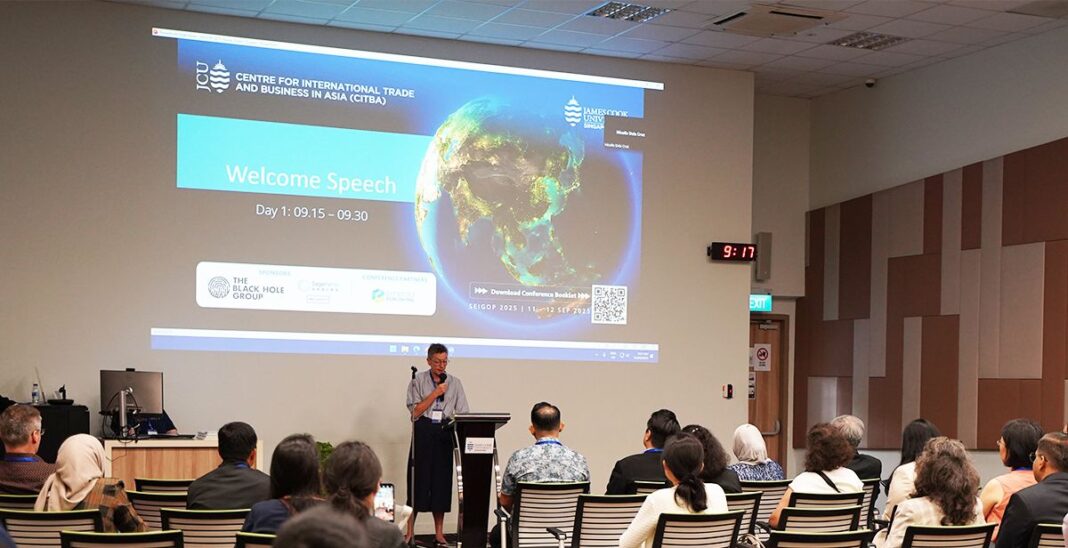
When 120 academics, researchers, and industry practitioners from 13 countries gathered at James Cook University’s Singapore campus this September, they weren’t just attending another academic conference. The SEIGOP 2025 Conference represented a pivotal moment for sustainability research in the Asia Pacific, where cutting-edge scholarship meets real-world application to address the region’s most pressing environmental and economic challenges.
SEIGOP 2025 Conference Drives Sustainability Innovation Across Asia Pacific
The Sustainability, Economics, Innovation, Globalisation and Organisational Psychology (SEIGOP) 2025 Conference took place on 11 and 12 September 2025 at JCU in Singapore. Moreover, this year’s gathering reinforced the event’s position as a premier platform for advancing multidisciplinary research and collaboration on sustainable futures throughout the region. The conference was hosted by the university’s Centre for International Trade and Business in Asia (CITBA).
Charting Sustainable Pathways for Regional Growth
This year’s compelling theme, “Sustainable Futures and the Asia-Pacific: Innovation, Integration, and Impact”, underscored the growing importance of balancing rapid economic growth with environmental responsibility. Furthermore, the theme called for innovative technologies, business models, and policies that can support both economic and ecological resilience across the region.
The conference emphasised the value of multidisciplinary research, bringing together diverse stakeholders from industries, governments, and communities. By focusing on measurable outcomes, participants explored how sustainability initiatives can translate into tangible benefits for the environment, economy, and society across the Asia-Pacific.
Collaborative Knowledge Exchange Drives Innovation
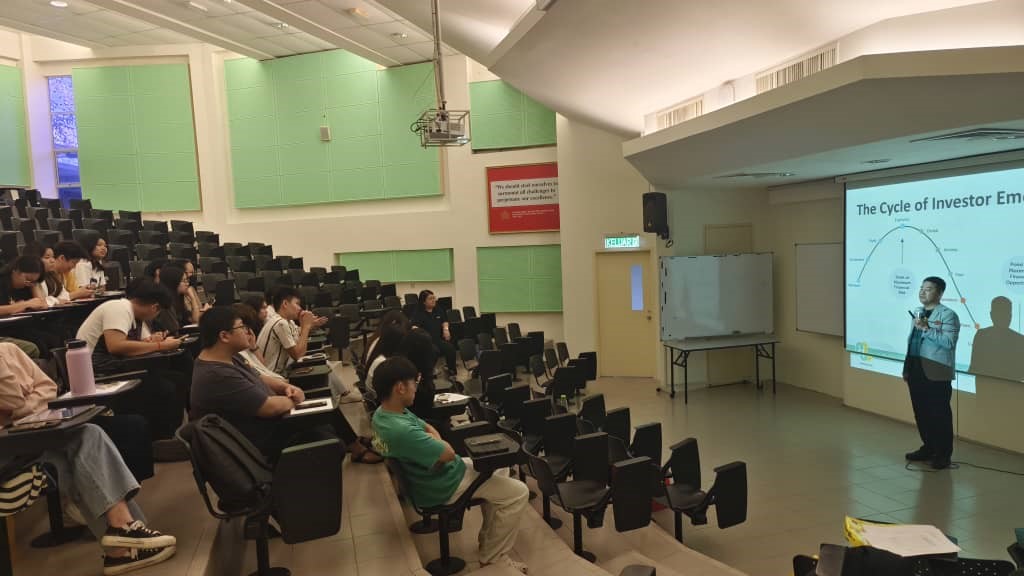
During the two-day event, participants exchanged insights through various formats, including panel discussions and parallel sessions that attracted 73 paper submissions from 13 countries. Critical topics such as sustainable development, green financing, sustainable tourism, and leadership in sustainability dominated the conversations.
“The conference created an open space for academics and industry practitioners to share their challenges and solutions. I found the exchanges very encouraging because they showed that research is not happening in isolation, it’s directly informing business practices and policies,” explained Professor Lim Weng Marc, Distinguished Professor and Dean of Sunway Business School at Sunway University.
Expert Panel Tackles Regional Environmental Challenges
The Sustainability in the Asia Pacific panel discussion, moderated by Dr Adrian Kuah, Professor of Strategy & Sustainability at JCU in Singapore, brought together diverse voices from government, industry, and academia. The distinguished panel included:
- Ms Putrie Rozana Soraya, Deputy CEO of Sarawak Trade and Tourism Office Singapore
- Mr Dalson Chung, Deputy Chair of Environment and Resource Standards Committee, NEA Singapore
- Mr Andrew Cameron, Founder & CEO of Enzyme Consulting
- Ms Latifahaida Abdul Latif, Assistant Director at ASEAN Secretariat
The discussion addressed critical regional issues including deforestation, transboundary haze, climate change vulnerability, marine ecosystem degradation, and energy consumption challenges.
Advancing Academic Excellence Through Publishing Workshop
The Meet the Editors Workshop – Publish in High-Quality Journals provided invaluable guidance for researchers navigating the complex academic publishing landscape. Professor Peter Hofman from JCU in Singapore moderated the session, with contributions from Professor Lim Weng Marc and Professor Alexander Josiassen from JCU in Singapore and Copenhagen Business School.
The workshop’s impact was immediately evident. As Mr Sun Renjie, a Higher Degree by Research student at the Business School, noted: “One particularly valuable insight I gained was from Professor Marc Lim about learning how to combine multiple review studies within a single SLR, which has refreshed my thinking about how I might approach future review studies.”
Celebrating Scholarly Achievement
The conference also featured the launch of Inspirational Entrepreneurship and Stimulating Tourism: Lessons from the Himalayas, co-authored by Dr Manisha Agarwal and Professor K Thirumaran from JCU in Singapore. This publication exemplifies the impactful scholarship emerging from the university’s research community.
Building Bridges Between Research and Practice
Professor Carole-Anne Upton, Deputy Vice-Chancellor of James Cook University Singapore and member of SEIGOP’s 2025 Advisory Committee, emphasised the conference’s broader significance. “Events like SEIGOP not only advance knowledge but also strengthen connections between researchers, practitioners, and the wider community,” she observed.
Unlike traditional academic gatherings, the conference fostered genuine collaboration between theory and practice. Professor Upton highlighted the quality of discussions and diversity of perspectives, noting that “researchers and practitioners alike were eager to share insights and challenge conventional thinking, which is exactly what we need to tackle the complex sustainability challenges our region faces.”
The SEIGOP 2025 Conference demonstrated that meaningful progress on sustainability requires more than isolated research efforts. By creating a dynamic forum where academic rigour meets practical application, the event has established itself as a catalyst for transformative change across the Asia Pacific. As the region continues to grapple with balancing economic growth and environmental stewardship, collaborative platforms like SEIGOP will prove essential for developing innovative solutions that benefit both present and future generations. The insights and partnerships forged at this year’s conference will undoubtedly influence sustainable business practices and policy decisions throughout the region for years to come.
For more information about research initiatives and academic programs, visit the Singapore campus of James Cook University.