
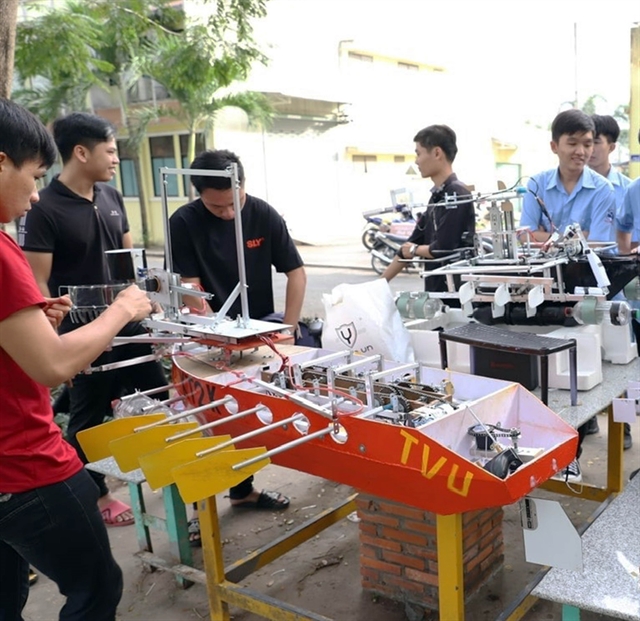
In Vietnam’s dynamic higher education landscape, Trà Vinh University has emerged as a beacon of innovation and academic excellence. Located in Vĩnh Long Province’s Mekong Delta region, this institution has steadily climbed global rankings while earning international recognition for its comprehensive programs and forward-thinking approach to education.
Trà Vinh University Climbs Global Rankings While Transforming Mekong Delta Education
With an expansive 53-hectare campus in Hòa Thuận Ward and a robust teaching cohort of more than 1,000 educators, the university offers an impressive academic portfolio. Students can choose from 10 doctoral programs, 19 master’s degrees, and 49 undergraduate programs, alongside several specialized health science tracks.
The institution’s academic breadth spans diverse fields including agriculture and fisheries, engineering and technology, health sciences, economics, law and logistics, management and tourism, biotechnology, environment, foreign languages, culture, and arts. This comprehensive approach ensures graduates are well-equipped for the region’s evolving economic needs.
Autonomy Drives Academic Innovation
Associate Professor Doctor Nguyễn Minh Hòa, the university’s rector, emphasizes that Trà Vinh University stands among 23 Vietnamese institutions piloting autonomy under the Government’s Resolution No. 77 from 2014. This autonomous status has proven transformative for the institution’s development trajectory.
“Being granted autonomy in academics, organisation and finance has helped the university actively reform governance and develop training programmes to international standards,” Hòa explained. Moreover, this independence has enabled rapid adaptation to market demands and international educational trends.
International Recognition Reflects Quality Excellence
The university’s commitment to excellence has yielded remarkable results on the global stage. For six consecutive years, it has maintained recognition among the world’s top 100 innovative universities with strong social impact. Furthermore, its 2025 WURI Ranking position of 29th among the world’s top 400 universities represents a significant 13-place improvement from 2024.
Environmental sustainability remains a core focus, with the institution ranking among the world’s top 200 universities for green and sustainable education according to the UI GreenMetric Ranking. Additionally, it has received the Excellent Digital Transformation Award for three consecutive years since 2022.
Accreditation Achievements Set Regional Standards
To date, 27 training programs have achieved international accreditation based on leading global standards. These include certifications from:
- Foundation for International Business Administration Accreditation (FIBAA – Europe)
- ASEAN University Network Quality Assurance (AUN-QA – Southeast Asia)
- Accreditation Board for Engineering and Technology (ABET – United States)
These achievements position the university among the Mekong Delta’s leading institutions for internationally accredited programs, setting benchmarks for regional higher education standards.
Innovative Training Models Meet Industry Demands
Understanding the critical need for skilled workforce development, Trà Vinh University continuously updates its curricula to align with business community requirements. The institution has implemented Canada’s “Co-op Model” (Cooperative Education), which allows students to earn income while studying, creating a win-win scenario for both learners and employers.
This innovative approach enables businesses to recruit trained workers without additional retraining costs, while students gain valuable real-world experience and financial support. Such practical integration of education and industry needs exemplifies the university’s commitment to producing job-ready graduates.
Research Centers Address Local Strengths
The university has strategically developed research and innovation centers that leverage regional advantages. The Mekong Delta Coconut Research Institute represents one such initiative, focusing on optimizing local agricultural resources. Additionally, expanded cooperation with Denmark, Germany, Japan, and Taiwan has facilitated technology transfer in wind energy, green hydrogen, and sustainable energy transition.
Addressing Regional Workforce Challenges
Despite the Mekong Delta’s substantial population of 17.4 million—representing 17.5 percent of Vietnam’s total—significant workforce development challenges persist. According to the 2022 Annual Economic Report, only 14.9 percent of regional workers have formal training, while merely 6.8 percent hold university degrees or higher qualifications.
These figures fall 11.9 percentage points below the national average, marking the region as having the country’s lowest educational attainment levels. The delta’s 17 universities, including six private institutions, play crucial roles in addressing this educational gap.
The Politburo’s Resolution No. 71, dated August 22, 2025, on “Breakthroughs in the development of education and training,” outlines comprehensive tasks for institutional reform, financial investment, and advancing higher education through innovation and integration.
Strategic Vision for Sustainable Development
Vĩnh Long Province has strategically identified developing high-quality human resources as a key priority alongside infrastructure and digital advancement in its 2025–30 socio-economic development strategy. The university’s ambitious goals include establishing a Mekong Delta Innovation and Start-up Centre while continuing to train high-caliber professionals for the region.
Looking ahead, both Cần Thơ University and Trà Vinh University are expected to maintain their pioneering roles in reshaping the region’s higher education landscape. Their experience and leadership will guide the delta’s university system toward sustainable development and enhanced regional competitiveness.
As Vietnam continues implementing educational reforms and pursuing digital transformation initiatives, institutions like Trà Vinh University demonstrate how regional universities can achieve global recognition while addressing local workforce needs. The university’s success story offers valuable insights for other institutions seeking to balance international standards with community-focused education, ultimately contributing to the Mekong Delta’s economic transformation through skilled human capital development.