
When academic institutions step onto the global stage to share their sustainability expertise, they help shape the future of energy policy across entire regions. Recently, Ubon Ratchathani University (UBU) demonstrated this international leadership by contributing to a groundbreaking energy efficiency workshop that brought together experts from across East Asia to tackle one of the world’s most pressing challenges.
UBU Champions Energy Efficiency at Major East Asia Policy Summit
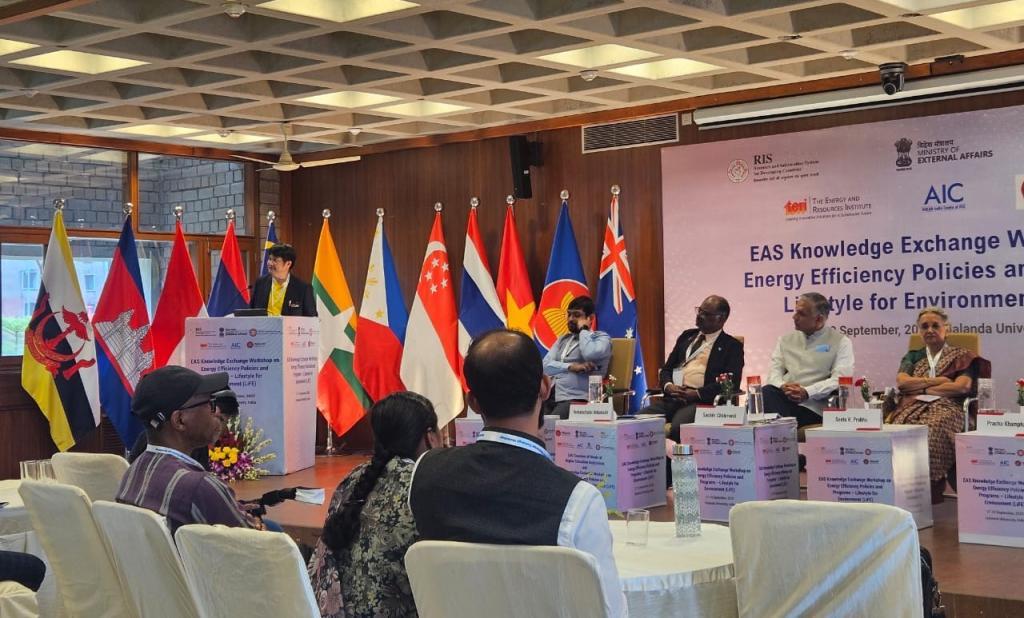
From September 17-19, 2025, Dr. Pracha Khamphakdi, Vice Dean for Student Development in UBU’s Faculty of Engineering, represented Thailand’s Ubon Ratchathani University at the prestigious EAS Knowledge Exchange Workshop. Moreover, this significant gathering focused on energy efficiency policies and Lifestyle for Environment (LiFE) initiatives, hosted by India’s renowned Nalanda University.
The workshop emerged as a collaborative effort between the ASEAN Centre for Energy and India’s Ministry of External Affairs. Furthermore, it successfully assembled leaders and experts from East Asia Summit (EAS) countries, creating a vital platform for exchanging best practices on energy efficiency, sustainable lifestyles, and comprehensive climate action strategies.
UBU’s Smart Technology Approach Takes Center Stage
During the workshop sessions, Dr. Khamphakdi showcased UBU’s innovative approach to sustainability through smart technologies and community engagement. Unlike traditional academic presentations, his contribution emphasized practical initiatives that promote sustainable living while building climate resilience within local communities.
The university’s comprehensive strategy demonstrates how higher education institutions can serve as catalysts for sustainable development beyond their campus boundaries. Through strategic community partnerships and technology integration, UBU has developed models that other institutions across the region can adapt and implement.
Exploring Nalanda’s Revolutionary Net-Zero Campus
One of the workshop’s most compelling features was the opportunity for participants to explore Nalanda University’s Net-Zero Campus firsthand. This remarkable facility has established itself as a global model of green infrastructure, seamlessly integrating multiple renewable energy sources and advanced systems.
The campus operates through an impressive combination of technologies:
- Comprehensive solar energy systems powering daily operations
- Innovative biogas solutions for sustainable energy generation
- Advanced water management and cooling systems optimizing resource efficiency
This living laboratory provided workshop participants with tangible examples of how educational institutions can achieve carbon neutrality while maintaining operational excellence. The experience offered valuable insights into renewable energy implementation strategies that universities worldwide can consider adopting.
International Collaboration Drives Policy Innovation
The workshop’s structure facilitated meaningful dialogue between policymakers, academic leaders, and sustainability experts. Participants engaged in comprehensive discussions about energy efficiency policies that could be scaled across different national contexts while respecting local economic and cultural considerations.
On the flip side, the event also highlighted the unique challenges that each EAS country faces in implementing sustainable energy transitions. These discussions proved invaluable for developing more nuanced, regionally-appropriate approaches to climate action and energy policy reform.
Building Bridges for Future Sustainability Initiatives
UBU’s active participation in this international forum reflects the university’s broader commitment to advancing global collaboration in sustainability research and policy development. The connections forged during this workshop will likely influence future joint research projects and ASEAN energy cooperation initiatives for years to come.
UBU’s participation reflects its commitment to advancing international collaboration in sustainability and supporting policies that foster innovation, resilience, and higher education for sustainable development.
This commitment extends beyond mere participation in international events. Instead, it represents a strategic approach to positioning UBU as a regional leader in sustainable technology development and climate-conscious education practices.
Knowledge Exchange Creates Lasting Impact
The workshop’s emphasis on knowledge exchange ensured that participants returned to their home institutions with concrete strategies and collaborative partnerships. Dr. Khamphakdi’s contributions helped establish UBU’s reputation as an institution capable of translating academic research into practical sustainability solutions.
These international connections strengthen UBU’s capacity to contribute meaningfully to regional climate goals while enhancing the university’s research capabilities through cross-border collaboration and resource sharing.
UBU’s meaningful participation in this East Asia Summit workshop demonstrates how universities can effectively contribute to international policy discussions while advancing their own sustainability missions. Through continued engagement in such forums, academic institutions like UBU help bridge the gap between research innovation and practical policy implementation, ultimately accelerating the transition toward more sustainable energy systems across the region. As these collaborative networks continue developing, they promise to yield even more impactful solutions for our shared climate challenges.